










Decorative panels 2026: sustainable, tactile and strikingly realistic
Texte Eva Goossens
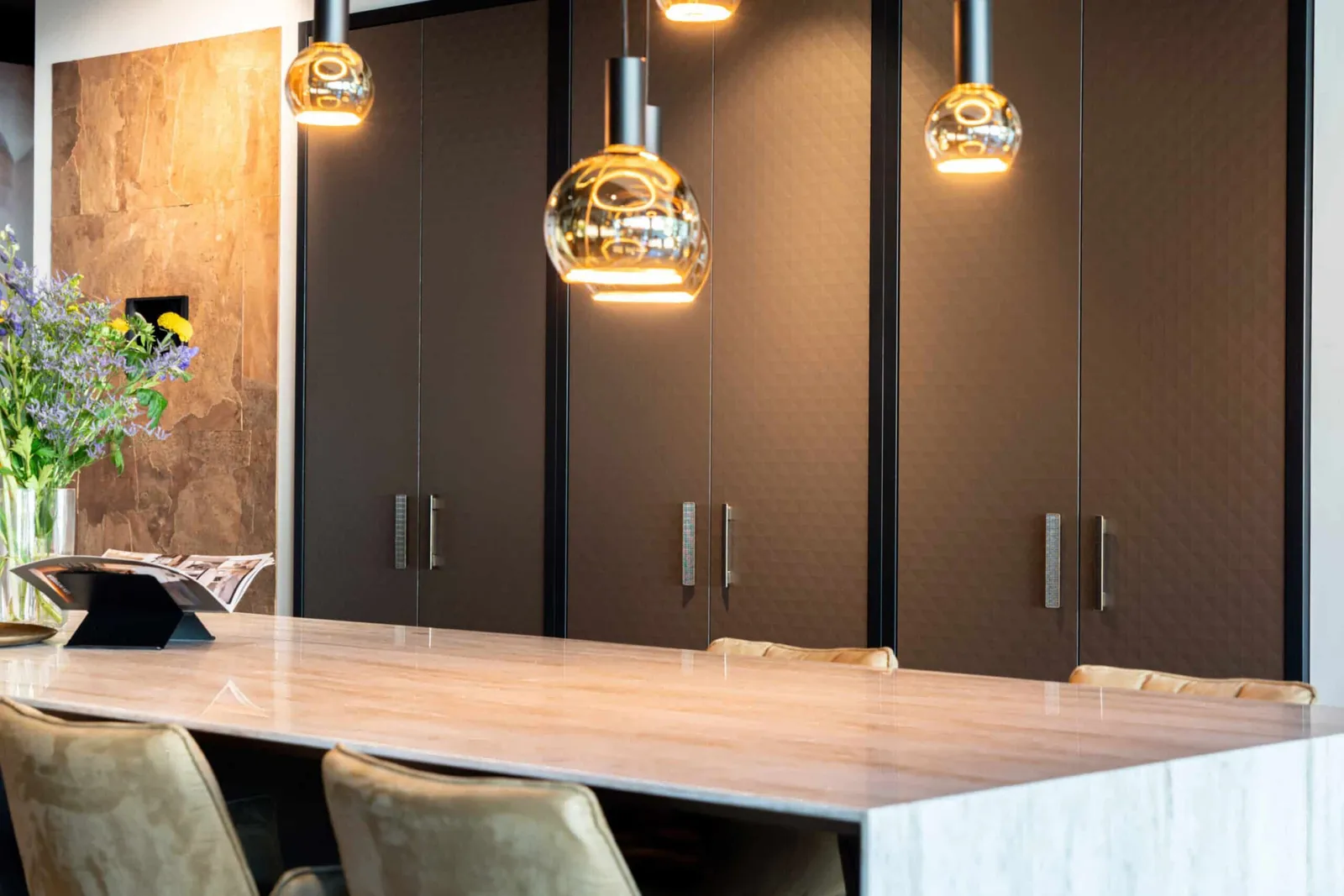
Panels are no longer just “decorative finishes”. Anyone who visited the international trade fairs Interzum in Cologne and Sicam in Pordenone could not have missed the message: sustainability is becoming tangible, textures can be felt, woodgrain designs are hyper-realistic and matt finishes need to perform better than ever. Notably, many award-winning innovations are helping to drive this change. Decorative panels are becoming a true design tool, enabling designers and manufacturers to stand out.
It is striking to see how different manufacturers, each drawing on their own expertise, are responding to the same central question: how can we create warmer, more sustainable interiors that offer a richer experience, without compromising on technical performance? The answer lies not in a single trend, but in the interplay between material innovation, new production techniques and a growing focus on the sensory experience. From circular raw materials to deep reliefs, and from ultra-matt finishes to subtle metallic effects, the latest panels invite us to mix, contrast and refine.
Sustainability and circularity: from ambition to industrial production
Sustainability has been a key theme for several years, but the sector is now clearly stepping up a gear. Unilin Panels is reaching an important milestone with its industrial MDF recycling technology. This process makes it possible to reuse MDF as a high-quality raw material for new panels. Each year, 70 000 tonnes of wood fibres will be reused in this way, equivalent to around 30% recycled content.
At the same time, Unilin Fibralux Biobased is gaining importance. This MDF solution is made from 100% reclaimed wood and a bio-based adhesive. Both the MDF recycling technology and the Fibralux Biobased melamine-faced decorative panel with a woodgrain design have received an Interzum Award in the “High Product Quality, Rethinking Resources” category.
Beyond MDF recycling and bio-based solutions, other players are also moving towards circularity. Abet Laminati, for example, uses a Re-Abet core made from recycled paper. These innovations are just a glimpse of the many sustainable developments shaping the panel sector today.
Texture, relief and 3D
One of the most striking decorative trends remains tactility and relief. At Interzum and Sicam, the range of surfaces that are both visually appealing and pleasant to touch has expanded further.
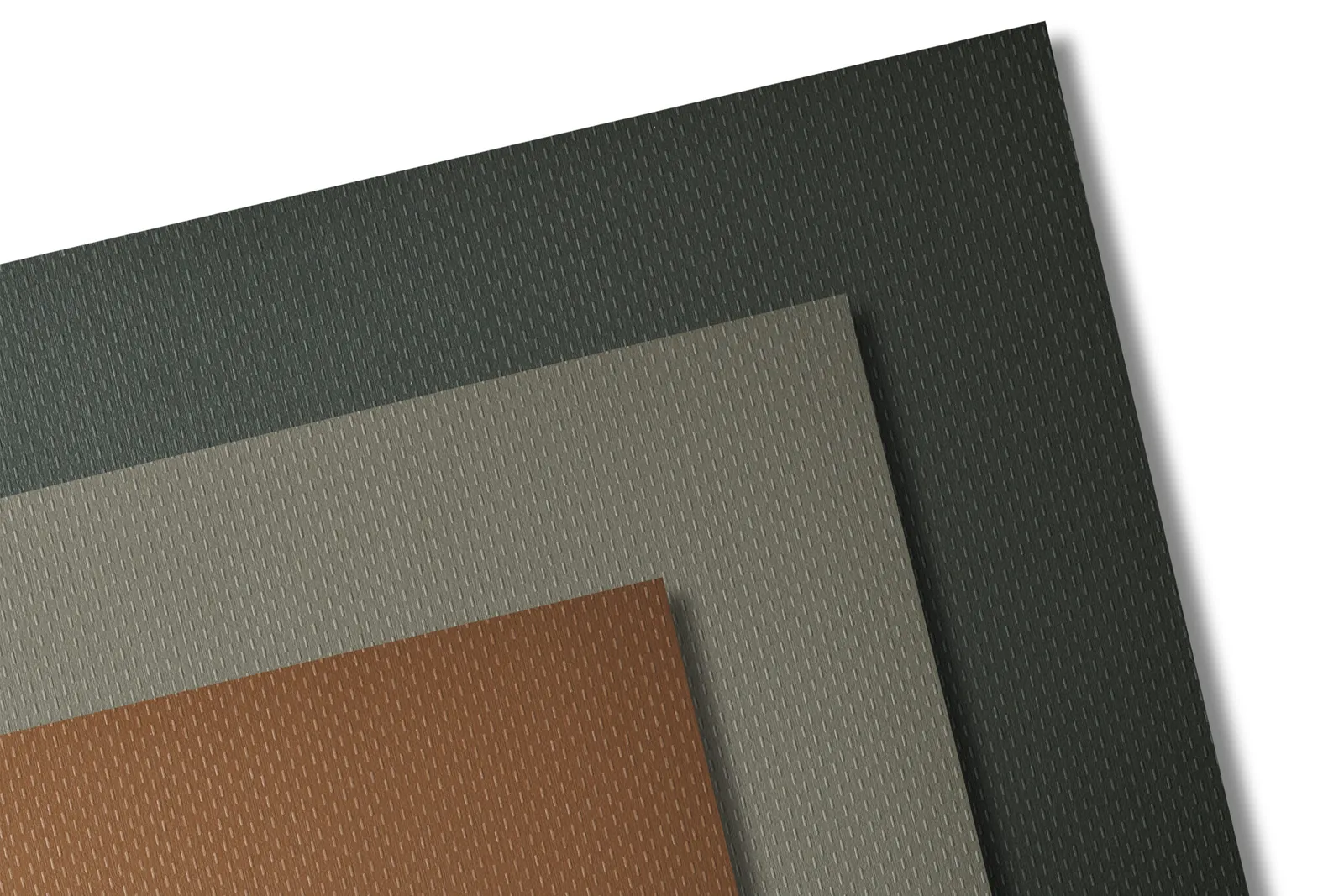
Lombardo’s award-winning Rain structure is a perfect example: a graphic mesh background crossed by regular pressed lines that create a dynamic 3D effect. With Fabric, Finsa offers a series of surfaces inspired by textile textures such as suede, linen and leather.
Even more striking, Cheope, one of the boldest structures in the Cleaf (DecoLegno) range, features a strong geometric relief reminiscent of architectural patterns. It is ideally suited to applications where the panel takes centre stage. At the same time, the finish remains refined enough to pair with more understated materials such as matt lacquers, woodgrain designs or subtle metallic accents.
Metallic effects: warmer, subtler and more refined
Another strong trend is ribbed textures. A notable example is Arpa’s deeply textured Tuet surface. This decorative HPL laminate is available not only in three woodgrain designs, but now also in a travertine design and a new soft palette of beige, ochre, pink, green and grey.
Homapal’s Perspectives/Depths family interprets the three-dimensionality of Tuet in five classic matt metallic finishes: natural, bronze, gold, copper and anthracite.
Metallic finishes remain popular, but their expression is changing. Instead of cold, industrial effects, we are seeing warm, refined metallic finishes with a subtle sheen. Another notable example is Cleaf (DecoLegno)’s new FD06 Reflex, in which a champagne-coloured metallic base is enhanced with a fine vertical glossy structure. The result is an elegant, silky effect that pairs harmoniously with wood and matt surfaces.
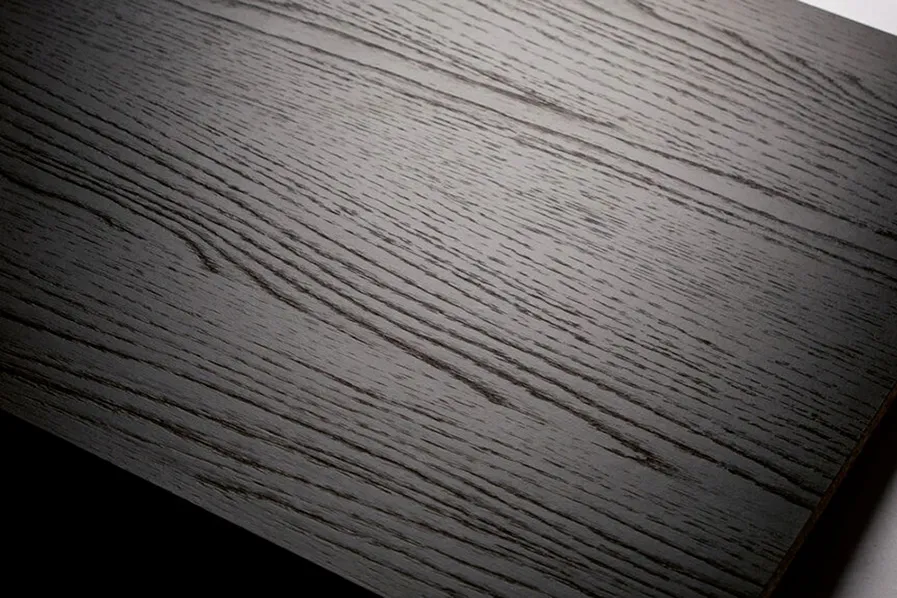
Award-winning, hyper-realistic woodgrain designs
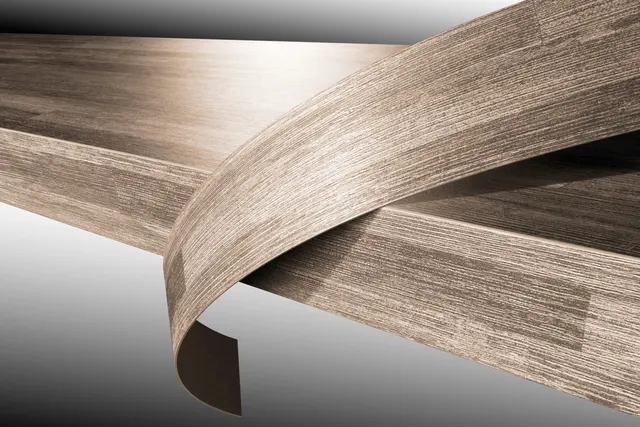
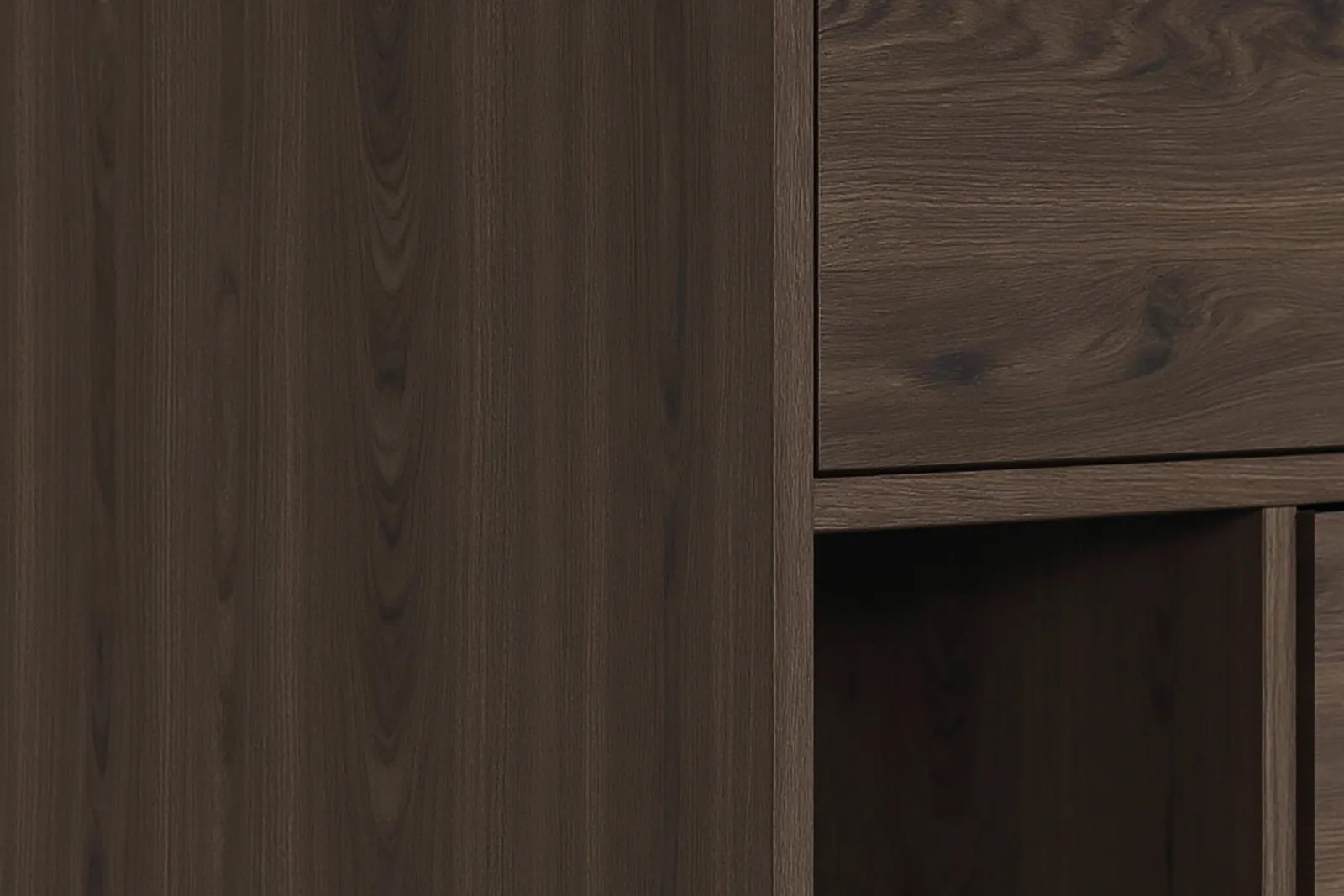
Woodgrain designs naturally remain a firm favourite. Thanks to recent technologies, their visual and tactile characteristics, known as Timber Touch textures, are closer than ever to the real thing.
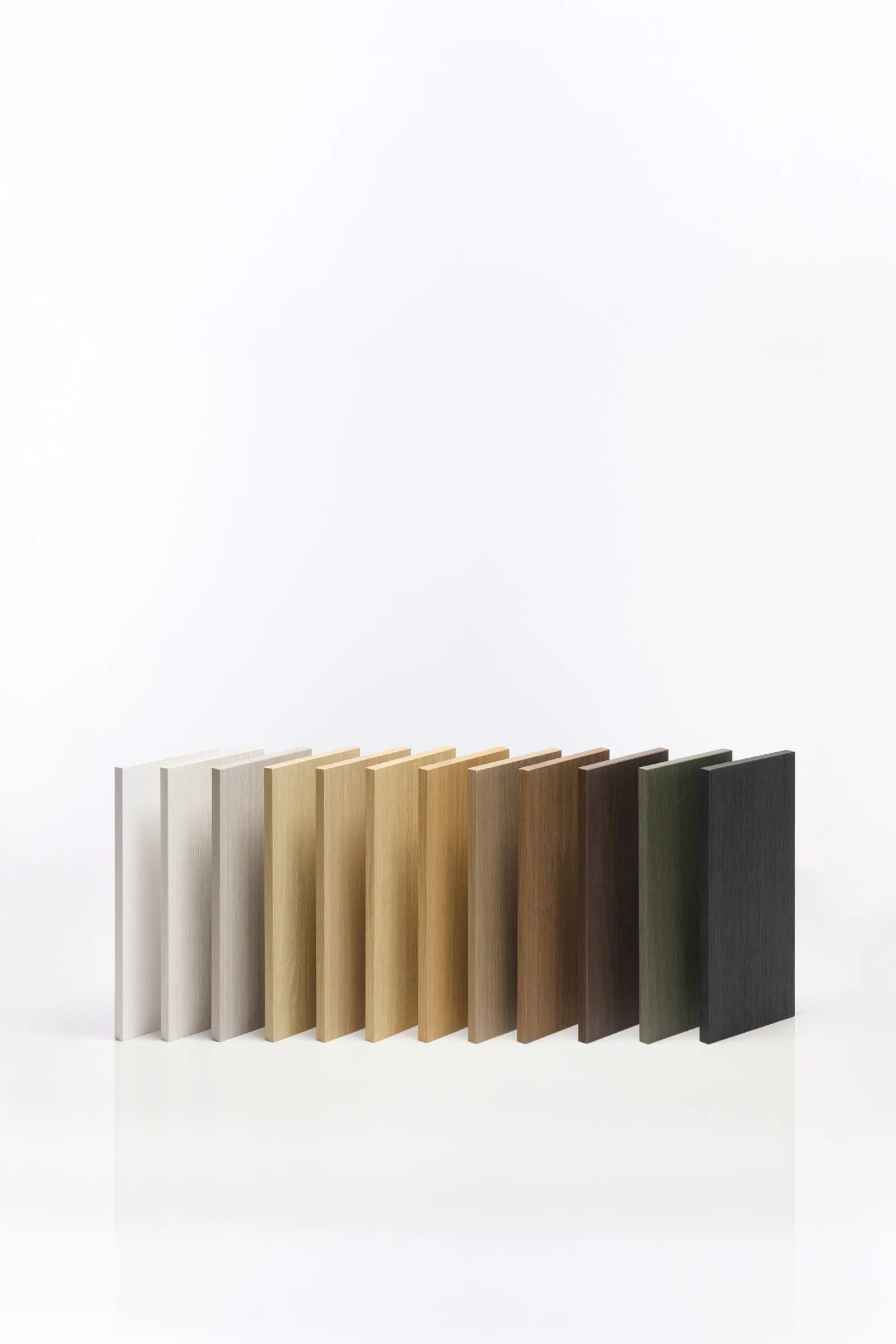
Unilin Panels demonstrates this with its award-winning Master Oak HPL collections, where the grain and texture are faithfully reproduced. The collection has recently been expanded with six new shades and received an Interzum Award in the “High Product Quality, Materials & Nature” category.
SWISS KRONO has also received an award for its sensesation collection, which makes strong use of this trend with technologies that combine visible pores, pronounced grain and matt finishes.
Interzum’s award winners also include two products from EGGER: ST35 Feelwood® Canyon and Repeatless. The latter comprises decorative panels that create a continuous, natural woodgrain effect with no visible repetition, making them ideal for large surfaces such as wall panels. Both innovations also won a Red Dot Award 2025.
High-performance matt materials
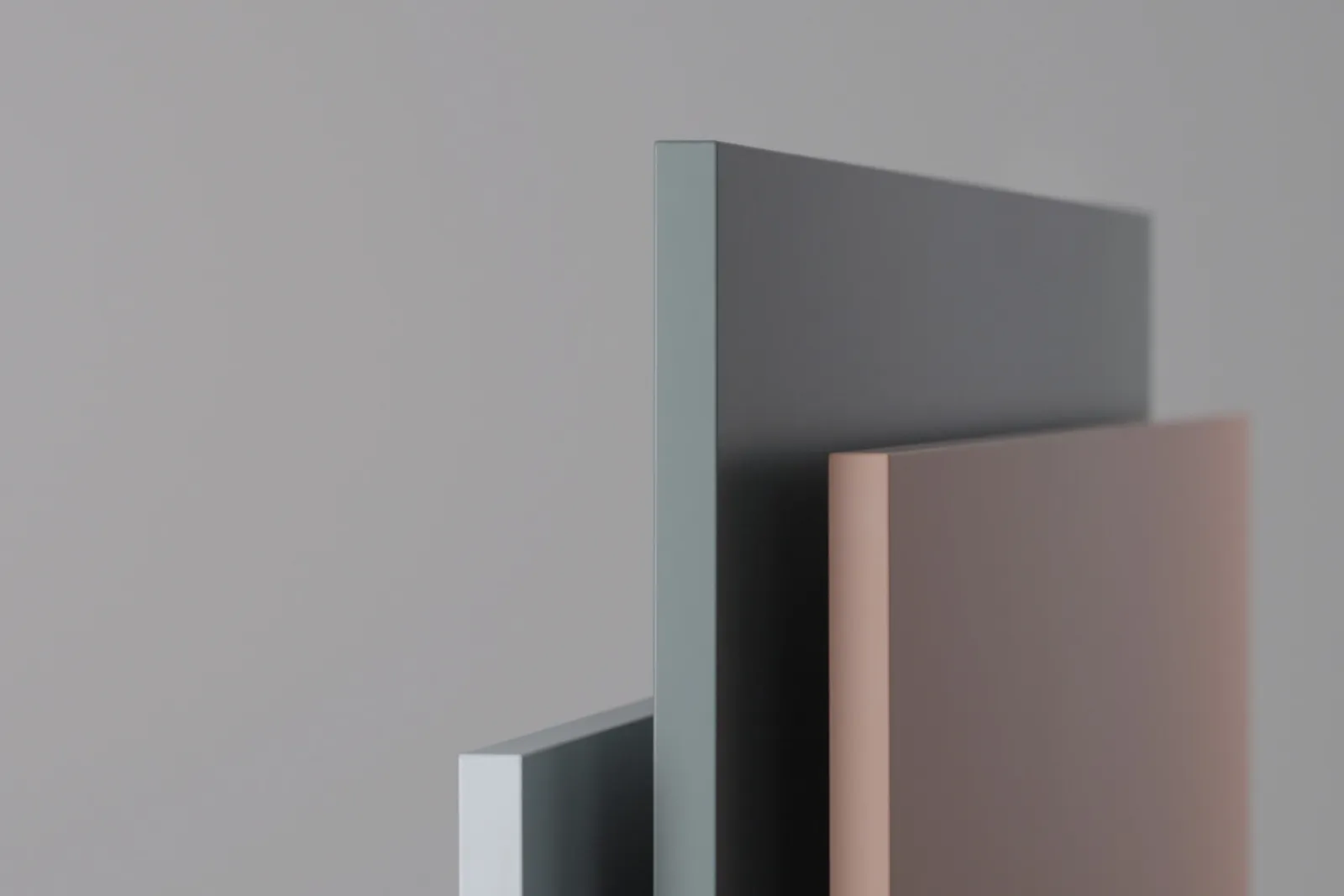
Supermatt remains a safe choice in interior design, but in 2026 matt surfaces need to deliver on performance. Beyond aesthetics, scratch resistance, resistance to fingerprints and ease of care are essential.
ALVIC’s Zenit 3.0, named “Best of the Best” at Interzum, is a good example. It is a UV-lacquered MDF panel with an ultra-matt, silky-touch surface, also suitable for vertical applications. Thanks to advanced nanotechnology, the surface has a dense, uniform lacquer layer that is highly resistant to scratches and fingerprints. It offers scratch resistance of up to 5 newtons, with a self-healing effect in the event of minor damage.
Pfleiderer is also continuing to develop its technologies with Duropal XTreme plus, now upgraded with Smart Care. This supermatt HPL laminate for heavily used horizontal surfaces combines improved scratch resistance with fingerprint resistance and an oleophobic “wipe-and-go” property, allowing cooking oil to be removed without leaving a residue using a dry microfibre cloth. For stains such as juice, vinegar or beetroot, a slightly damp cloth is all that is needed. The product received a German Design Award Winner 2026.
Combining is key
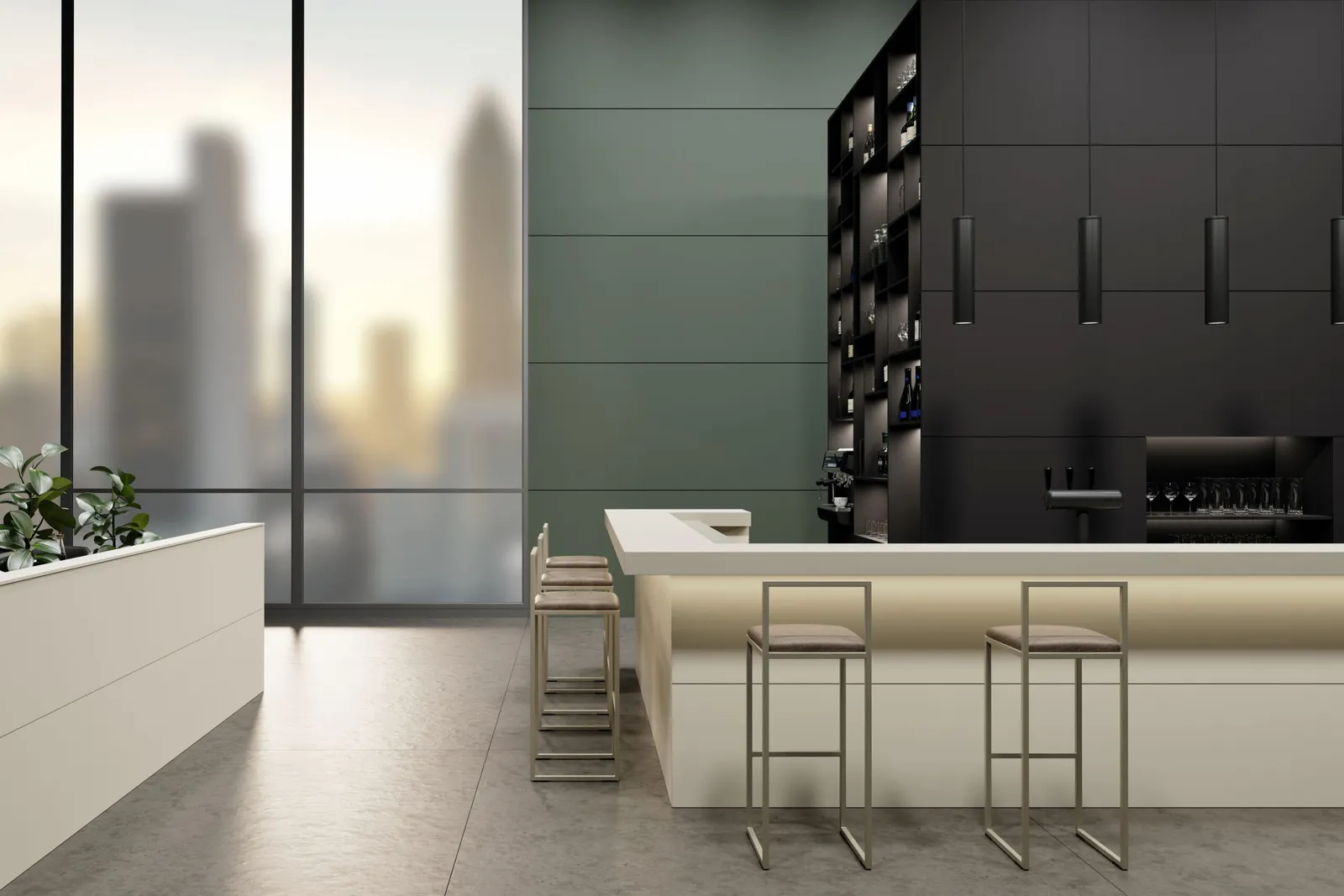
The clearest takeaway from Interzum and Sicam is that trends rarely stand alone. The added value lies in combining them.
According to Pfleiderer’s analysis of designs and structures, trends towards 2026 are evolving in non-linear ways and interweaving: natural materials and craftsmanship remain essential, but are enriched with Mediterranean influences, textile structures and even references to the 70s and 80s.
The result is a rich palette of wood, stone, textile and metal designs, explicitly conceived to be used together. This approach is also reflected in Broadview Materials’ kitchen concepts. In projects such as Sophisticated Depth, a deeply ribbed structure (Arpa deep surface) is deliberately combined with Homapal’s reflective metal. In Golden Elegance, matt surfaces are subtly balanced with warm metallic accents.
The common thread is clear: panels are no longer chosen as standalone decorative finishes, but as elements in a carefully orchestrated whole. It is precisely in these combinations, matt and glossy, soft and robust, natural and technological, that contemporary interior design finds its full strength.
Question about this story? Ask your question
Keep following this
Get an email when a new story is published. No account needed.
- ThemeTimber and panels under pressure
- SubjectNews