









Off-site timber construction: a double lever for more sustainable and smarter building
Texte Marlies Decavel | Photos Siemon Vanderhulst/WOOD.BE
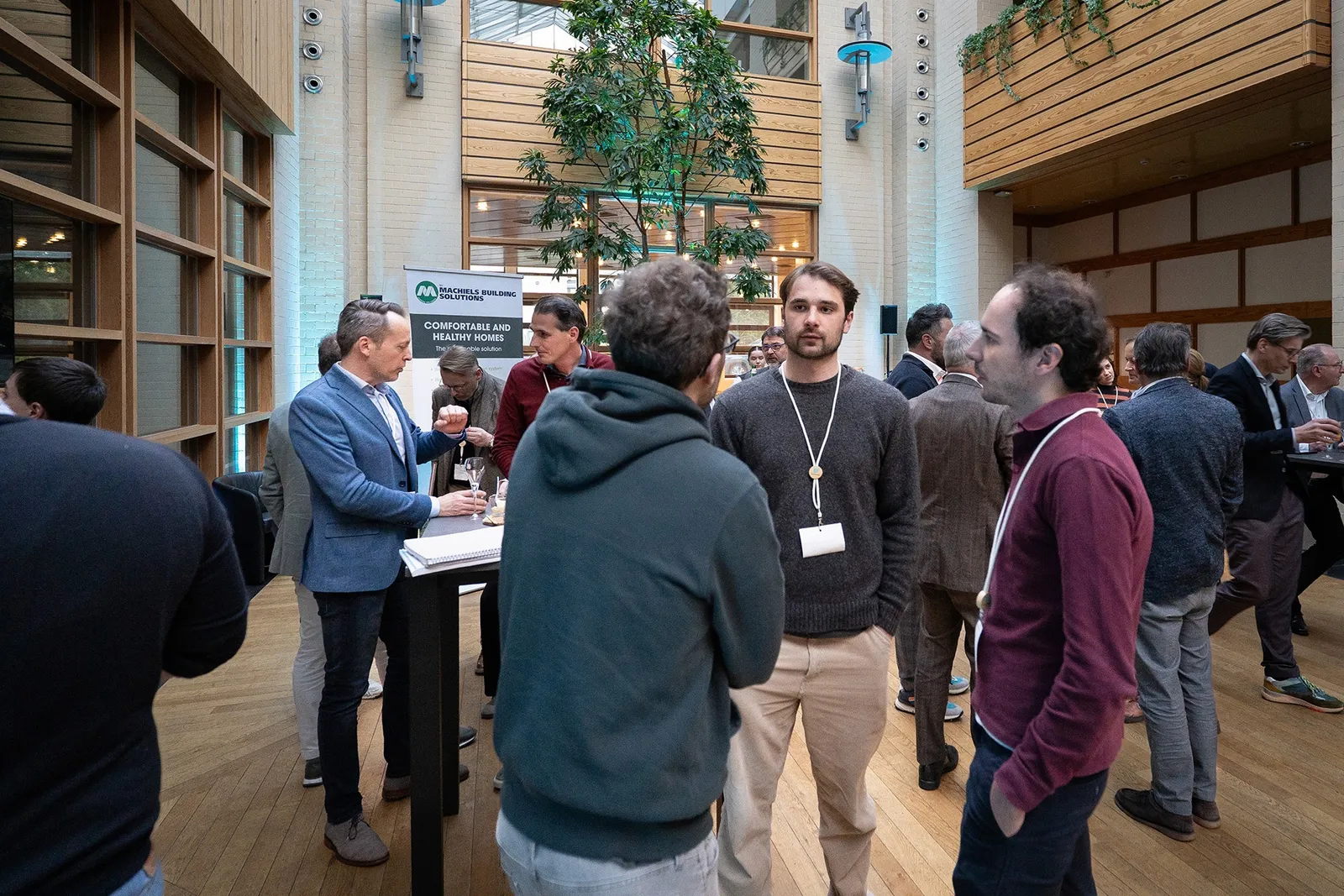
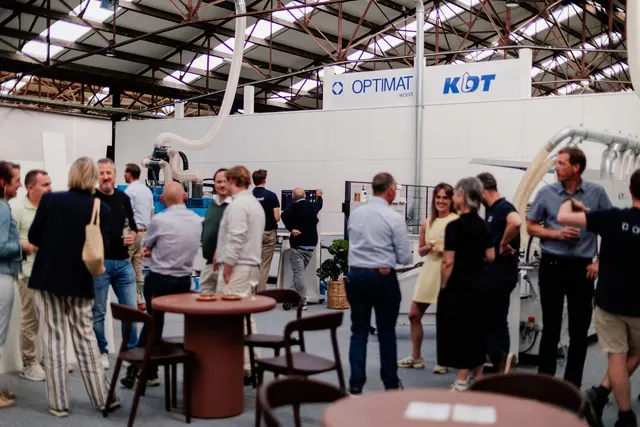
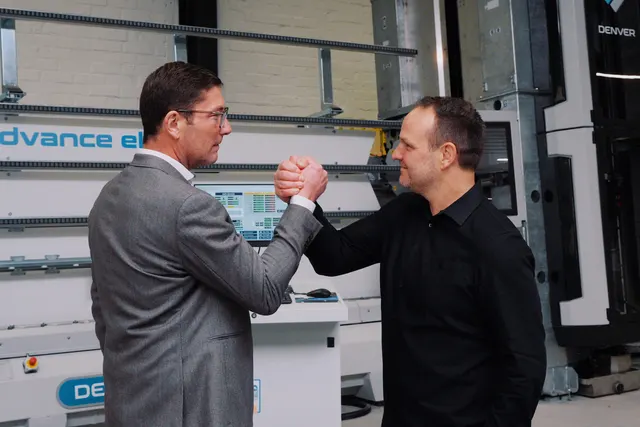
At the latest edition of Inspired by WOOD, held at Fedustria’s premises, WOOD.BE once again brought together professionals from the wood and construction sectors. The study day focused on the theme “Building the future: IMPACT with timber construction”. Drawing on research findings, practical case studies and a panel discussion, one thing became clear: the transition to faster, more sustainable and smarter construction is already well under way. The day’s conclusion? Timber and the industrialisation of construction together provide a powerful lever for the future.
The construction sector is under pressure from rising sustainability requirements, economic challenges and growing demand for affordable housing. At the same time, opportunities are emerging to change how we build. The new approach involves a clear shift: from traditional, fragmented construction to a more controlled, industrial and circular way of working, characterised by more systems thinking and closer collaboration across the value chain.
Wood has a positive effect on the brain
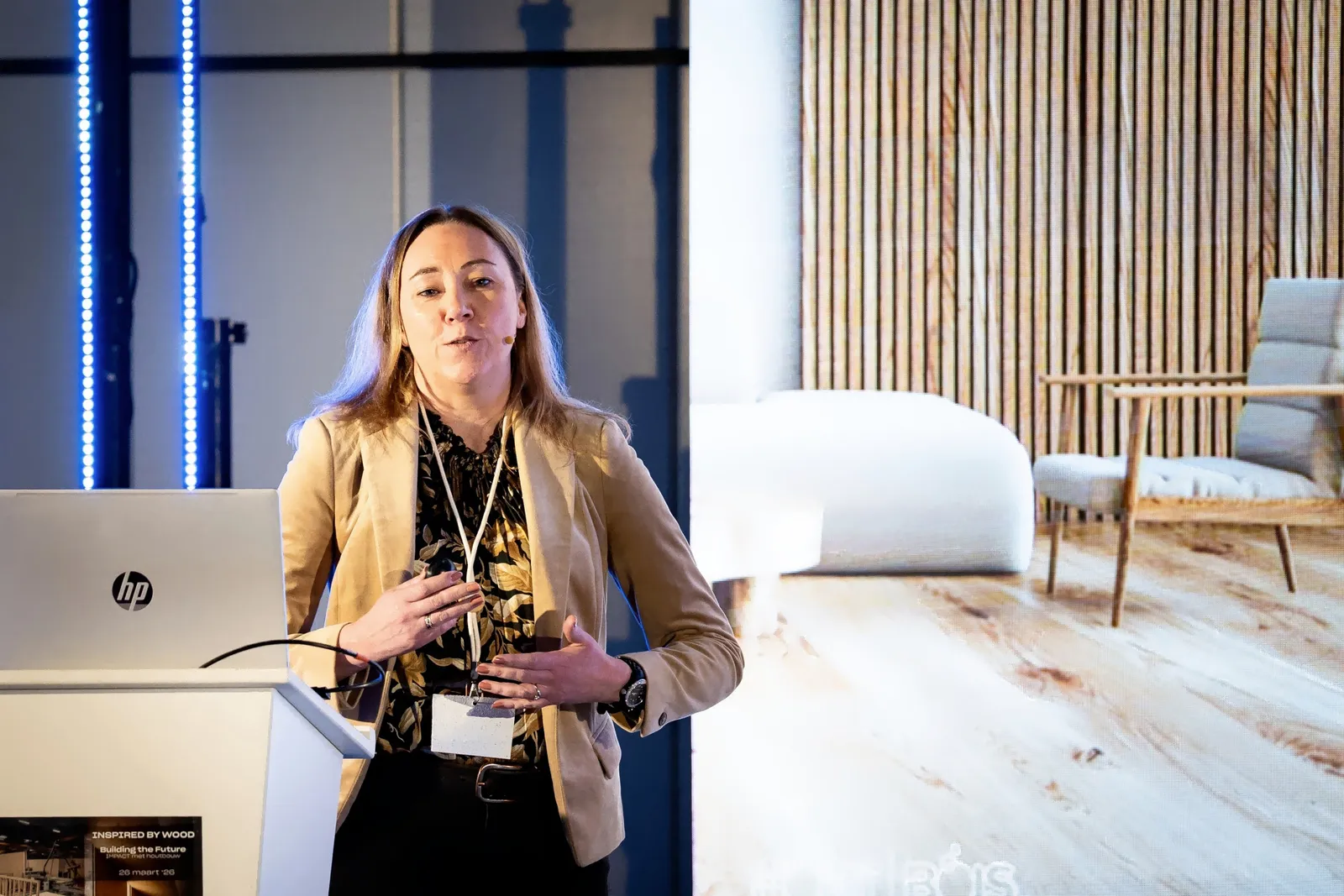
Katja De Vos (Fedustria) provided an inspiring first insight with her presentation of the study entitled “Our brains love wood”. Functional MRI scans were used to analyse how people respond to different materials in various environments. The results were remarkably consistent. Wood has a clearly positive impact on wellbeing: in homes, it creates a sense of security and strengthens bonds; in offices, it stimulates creativity and trust.
In classrooms, wood reduces stress and boosts self-confidence, while in care environments it encourages social interaction and calm. “There is evidence that our brains respond differently to wood than to other materials,” said Katja De Vos. Her message is clear: material choice matters. Neuroarchitecture offers practical tools for designing buildings that are both functional and people-centred.
Industrialising the construction sector: a necessity
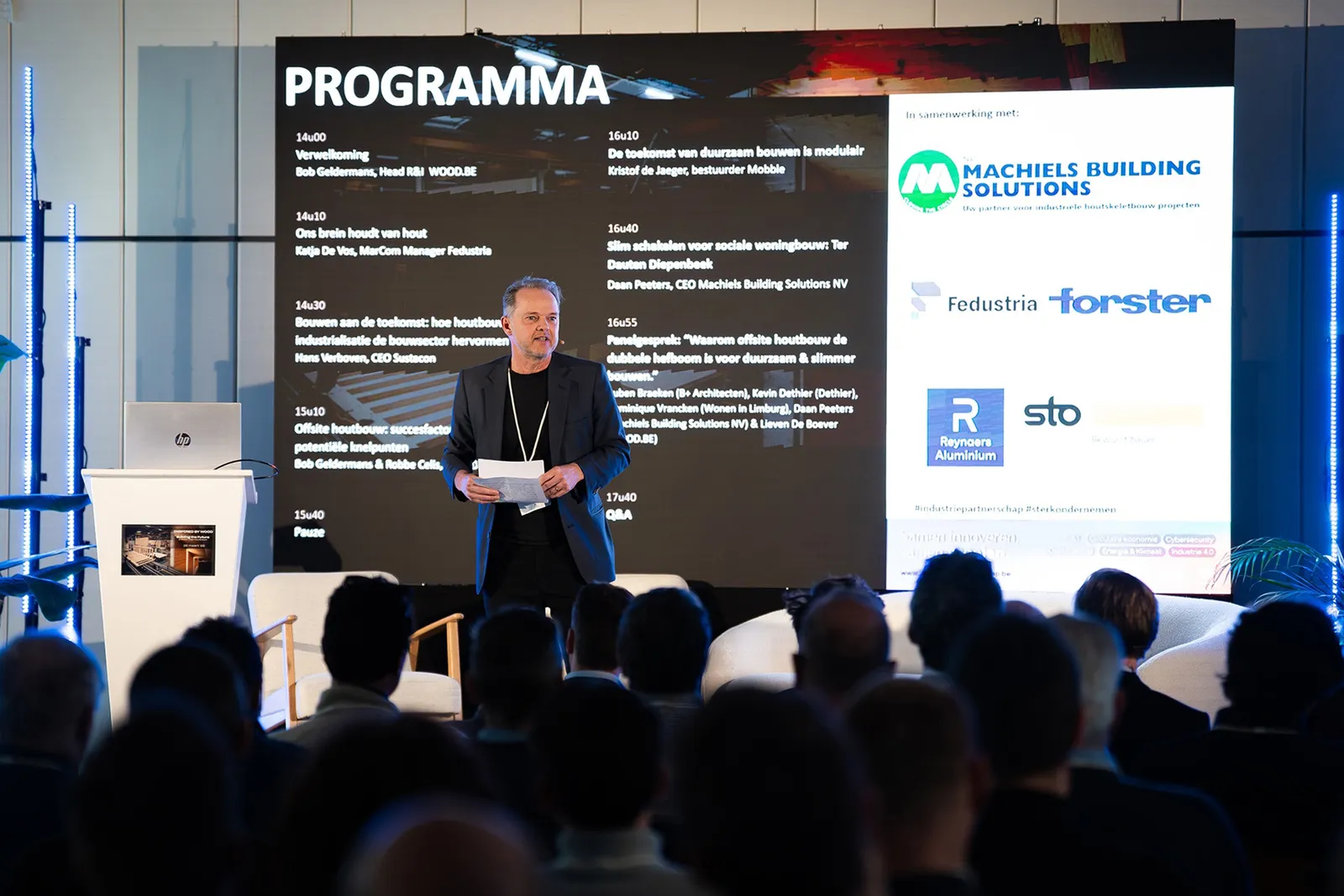
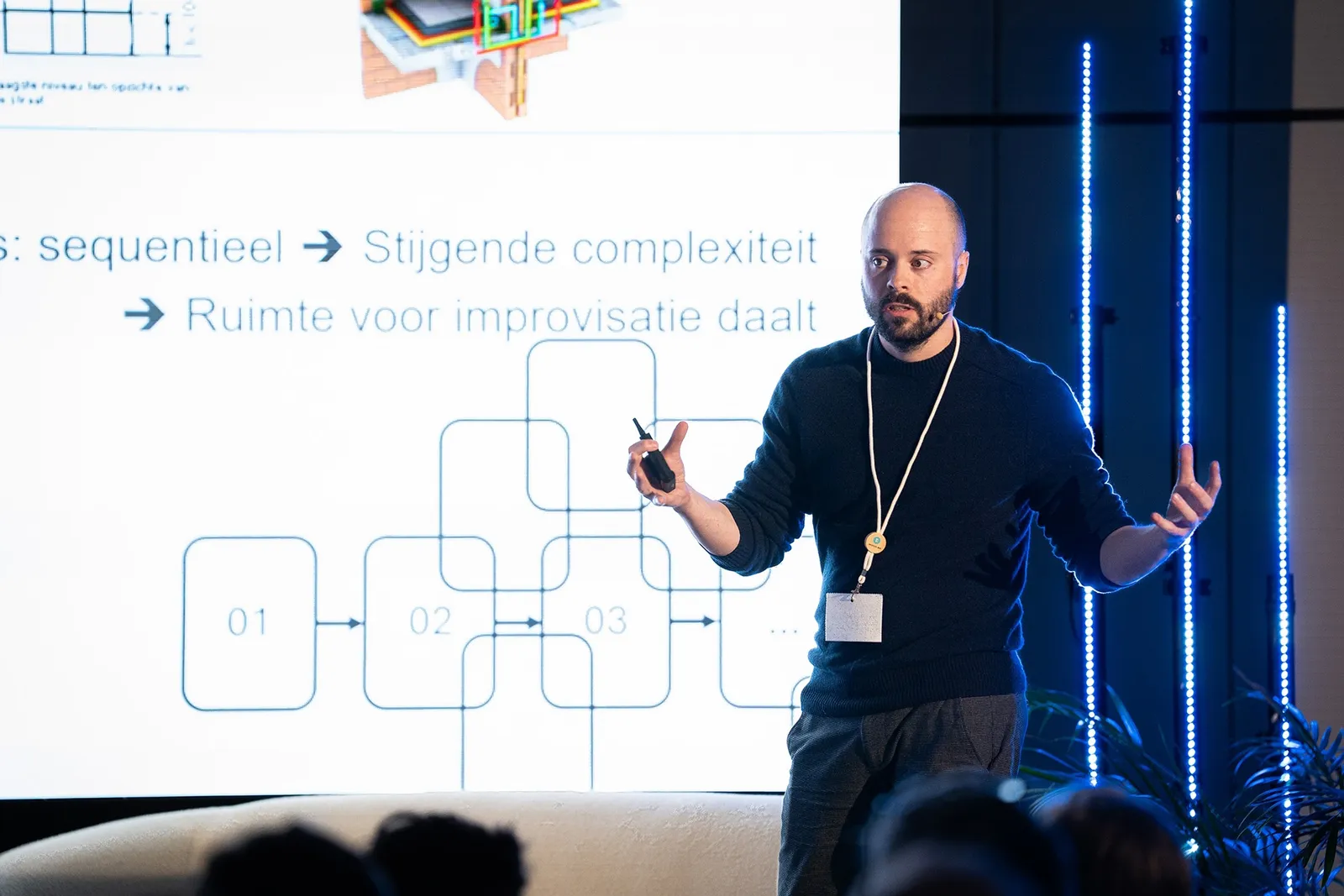
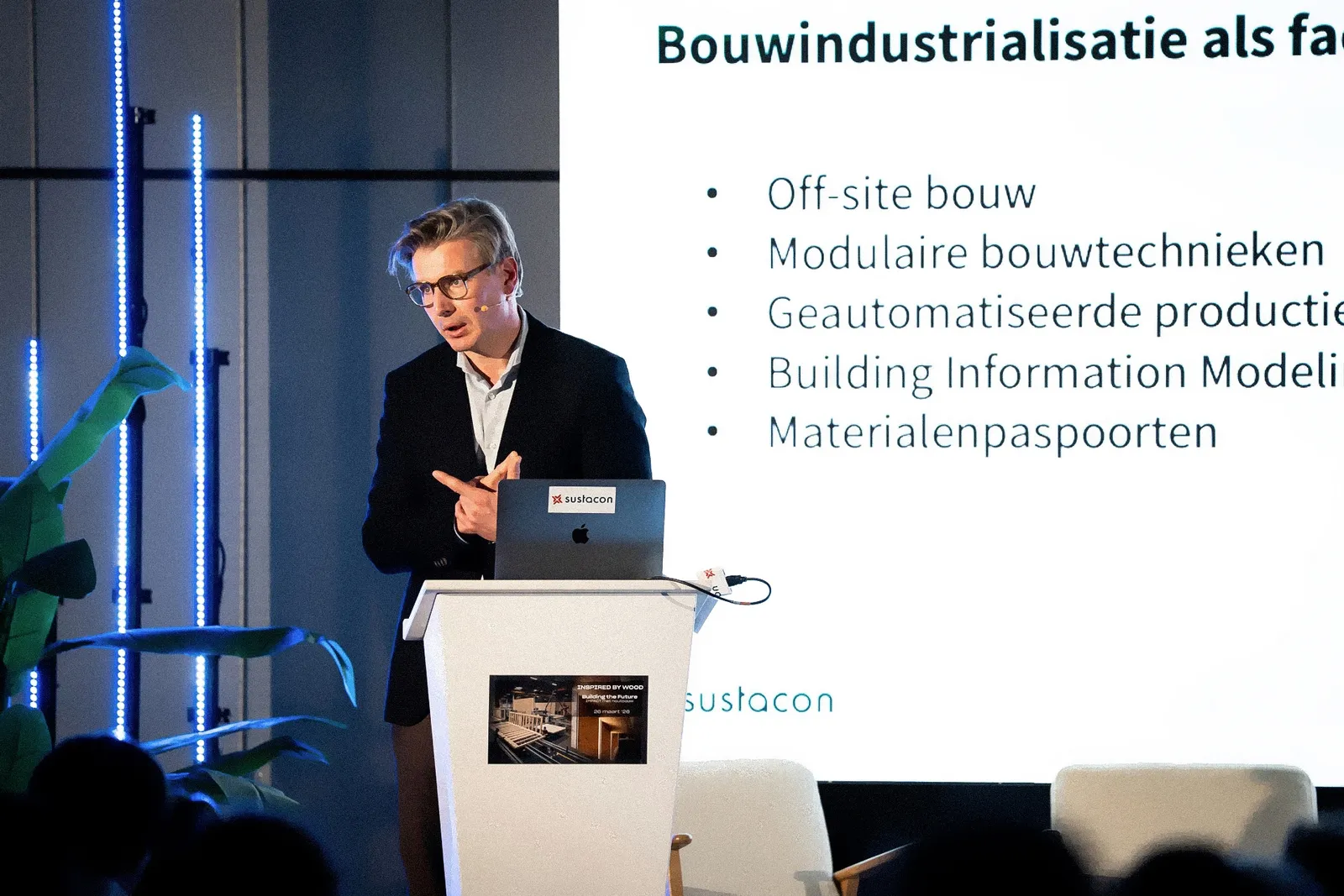
In the theoretical part of the programme, Hans Verboven (Sustacon/University of Antwerp) outlined the main aspects of this transition. The traditional construction sector faces structural problems, including complex logistics, fragmented communication and costs arising from errors that can sometimes reach 20%. Add to this stricter regulations, sustainability pressures and economic uncertainty, and it is clear that change is inevitable. “This is more than an unfortunate combination of circumstances: we are facing a real hurricane,” he said.
In his view, industrialising construction offers a solution. “We need to move towards a building method that offers greater control and fewer surprises. This means better process control, lower costs arising from errors, shorter lead times, greater safety and predictability, and more efficient energy use.”
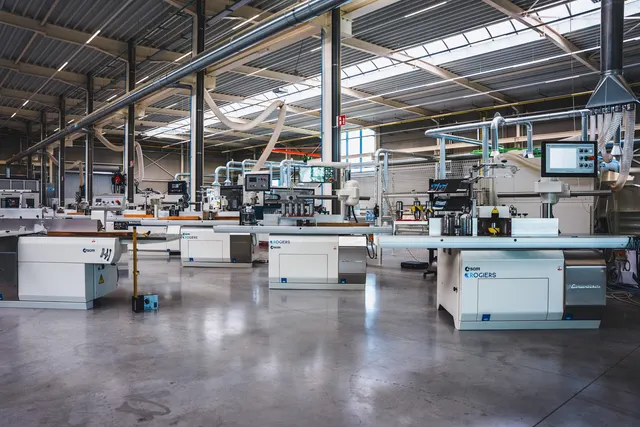
Off-site construction plays a key role in this. “By moving production to a controlled industrial environment, you transfer complexity from the building site to a setting that can be managed.”
Timber as a catalyst
According to Hans Verboven, timber is the ideal material to support this transition. “Timber combines a range of benefits, including speed, precision and ease of documentation, making it an ideal candidate for industrial construction processes.” It also has strong circularity credentials. In this respect, Hans Verboven emphasised the importance of a pragmatic approach. “Every project needs to be considered as a whole. Hybrid forms of construction, combining timber, concrete and steel, remain relevant to achieving the best solution. A full life cycle assessment (LCA) provides the basis for making the most sustainable choices.”
The European taxonomy is also accelerating this transition. It sets higher standards for reducing CO2 emissions, circularity and documentation. “By investing in modular systems, BIM and material passports, we can create sustainable buildings with clear economic added value.”
Traditional vs prefabricated construction
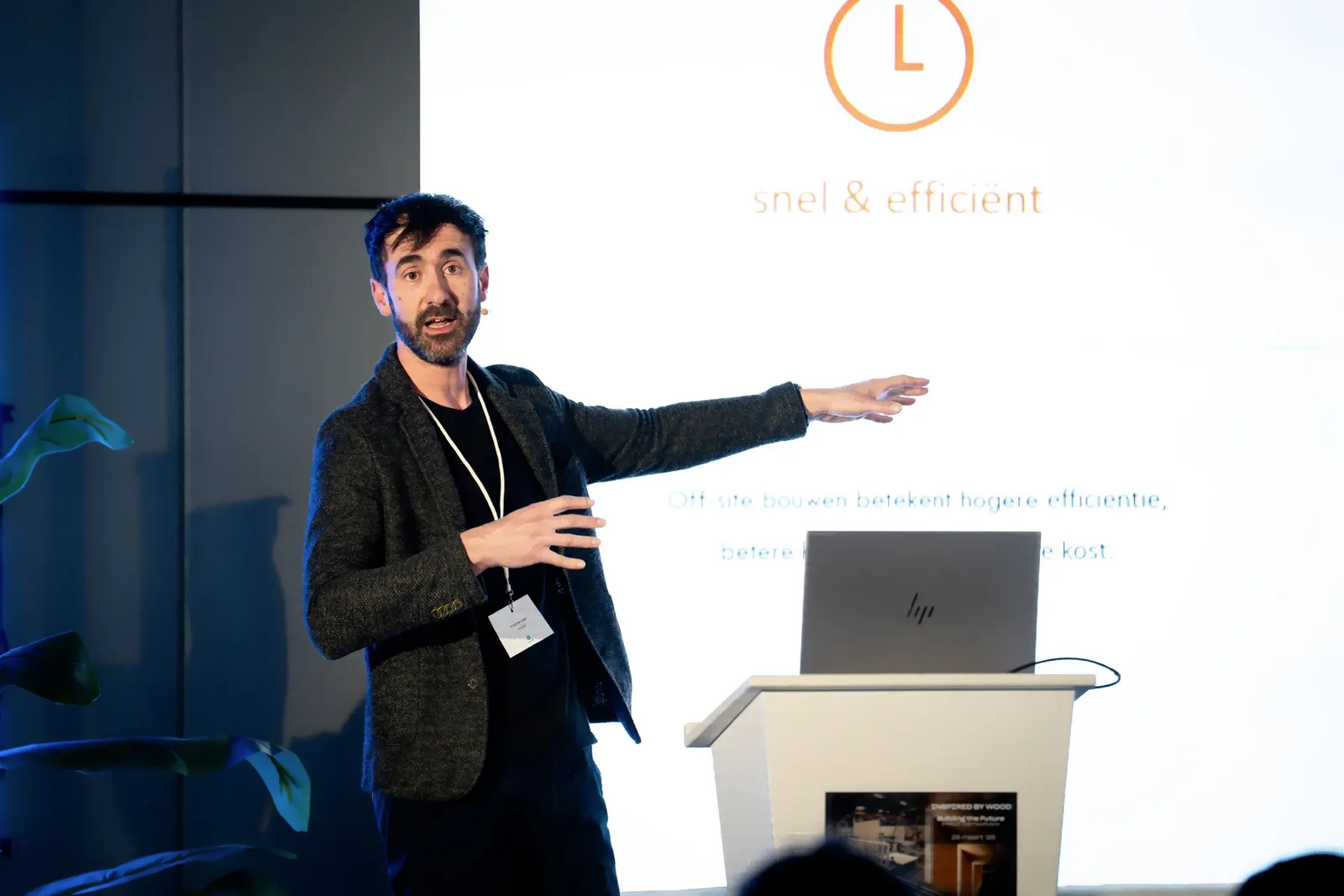
Bob Geldermans (Head of Research & Innovation) and Robbe Celis (Research & Innovation Expert), both from WOOD.BE, translated these ideas into practice by comparing traditional and prefabricated construction methods. Traditional construction is a linear, fragmented process. Contractors take turns as the project progresses from foundations to finishes. The process involves a fair amount of improvisation, with the risks that entails. Prefabricated construction, although still largely linear, is far more controlled and more closely integrates design and execution. “Prefabrication allows much of the uncertainty to be moved to a stage where it can be managed,” explained Robbe Celis. “The design process requires more preparation, but execution is faster and more efficient.”
At the same time, the experts remained realistic. “In Belgium, where the renovation market is highly active, every project requires a tailored approach. A hybrid method, combining on-site work where necessary with off-site construction wherever possible, is often the most appropriate solution.”
Modular construction in practice
Two real-world case studies showed that the theory presented in the first part of the afternoon is already being put into practice.
Think first, build second
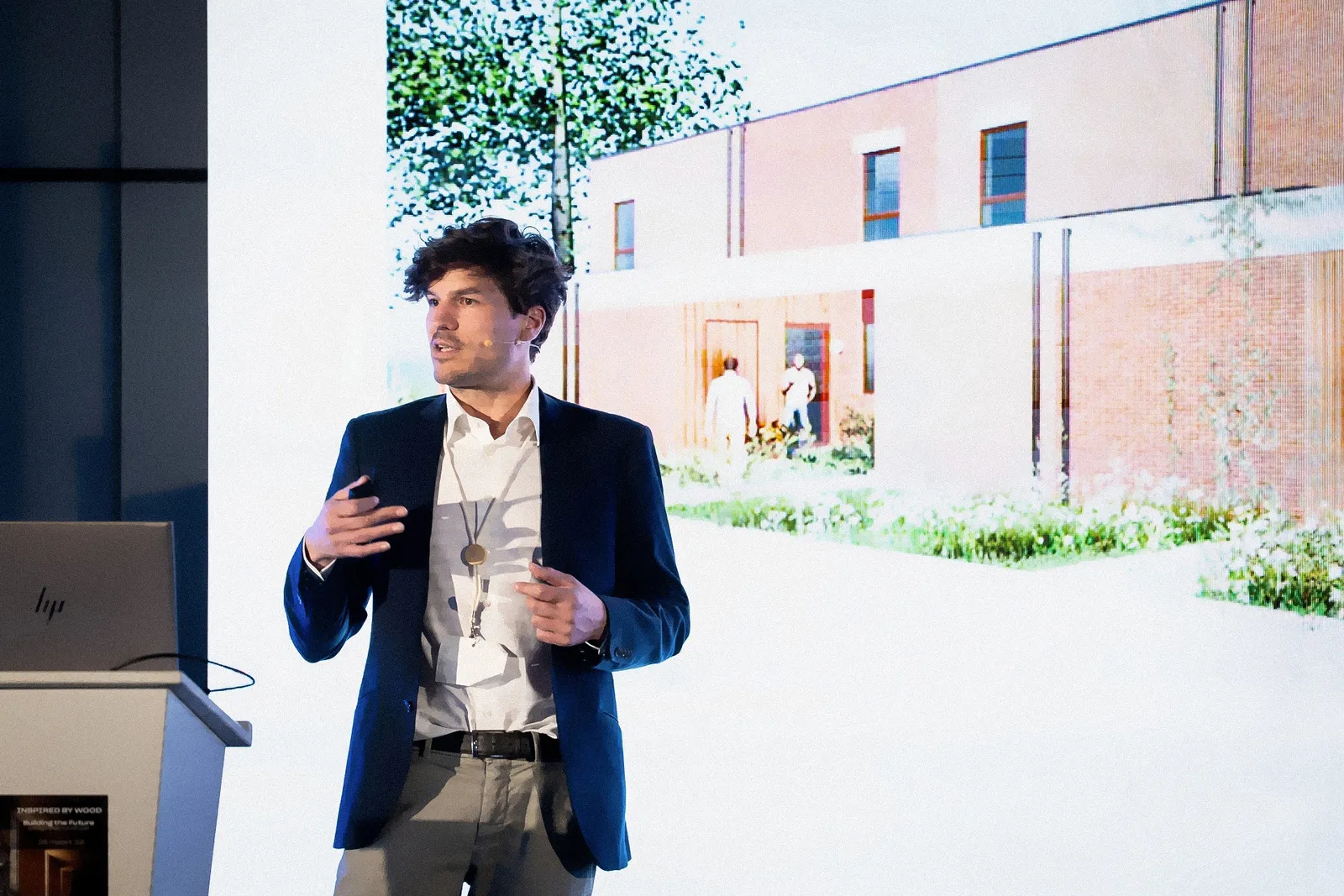
Kristof de Jaeger (inhout/Mobble) explained how modular timber construction responds to today’s challenges. International studies show that the building sector remains responsible for a considerable share of CO2 emissions, more than 40%, while construction methods have barely changed over recent decades. “We still build far too often as we did in the 90s, even though other solutions have been around for some time,” observed Kristof de Jaeger. “Modular construction should not be presented as a utopia. It is already a reality, and an absolute necessity.”
The key lies in taking a different approach to the process. From the outset, the aim is to work as a single construction team, with the client, architect and contractor making decisions together. All choices are carefully considered and documented in advance, after which the work is carried out in a controlled environment. “Think first, build second. It takes more effort at the start, but later brings considerable gains in time, quality and predictability.”
Although every project is bespoke, construction is largely standardised. This delivers excellent efficiency without sacrificing flexibility. One striking example is Mobble’s “infill house”: a modular terraced house that replaces an existing dwelling that cannot be renovated. Thanks to meticulous preparation, from the 3D scan and design through to the demolition survey, Mobble can build such a house in just seven weeks, including finishes. Compared with traditional construction methods, this saves up to nine months.
Moving beyond the prototype mindset
Daan Peeters (Machiels Building Solutions) also demonstrated the potential of industrialisation to speed up construction, particularly in the social housing sector. For a design-and-build project at Ter Dauten in Diepenbeek, the team used a growing library of standardised building components that can be reused and refined each time. Daan Peeters: “We need to move away from the idea that every project is a prototype. By working with reusable elements, we learn with every project and become more efficient all the time.”
This approach delivers excellent results. For a residential project, we can achieve a lead time of around three months. “Everything is clarified in advance. This allows us to work faster and avoid surprises on site.”
Sustainability also plays an important role. Using timber as a local, renewable material, reducing costs arising from errors and optimising processes all substantially reduce environmental impact. “Speed, quality, sustainability and affordability are not incompatible. If the process is organised well, they all fit together.”
Panel discussion: from ambition to reality
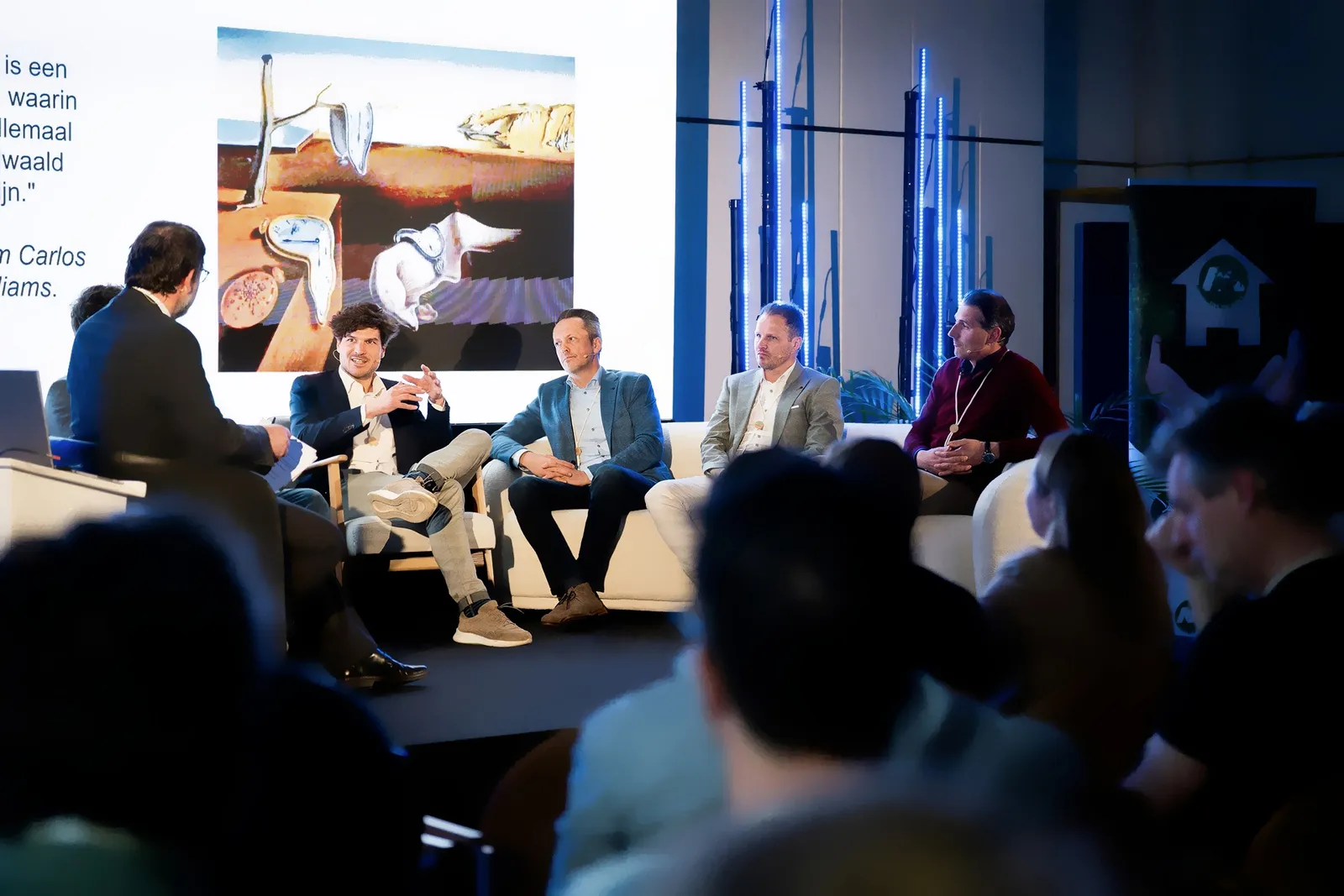
The closing panel brought together different links in the value chain around a shared conclusion: off-site timber construction enables the sector to pick up speed while taking quality and sustainability to the next level. Projects with lead times of around three months demonstrate that this pace is already achievable, provided there is thorough preparation, clear decisions and close collaboration. Using standardised components and a constantly expanding library of solutions creates a learning process that delivers efficiency gains with every project. This acceleration also has an economic impact: buildings reach the market sooner, increasing their availability and value.
At the same time, comfort and technical performance remain high thanks to thorough process control and an integrated approach to design and execution. Standardisation and architectural freedom reinforce one another within modular systems that allow for variation and customisation. Progress is also being made on sustainability, with certification as a foundation and growing attention to reuse and locally sourced, renewable materials. In the face of future challenges such as renovation and densification, adaptable and modular construction concepts are becoming increasingly important. The tools are there. The next step is to make greater use of them.
In his closing address, Chris De Roock, General Manager of WOOD.BE, called for these ideas to be turned into concrete action. Inspired by WOOD aims not only to inspire, but also to mobilise. Chris De Roock concluded with an open invitation to the audience: which topics deserve a place at the next edition, and which challenges will we take on together? Let WOOD.BE know.
This edition of Inspired by WOOD was organised as part of #partenariatspourlindustrie, with the support of VLAIO. In collaboration with Machiels Building Solutions, Fedustria, Forster, Reynaers Aluminium and Sto NV.
Question about this story? Ask your question
Keep following this
Get an email when a new story is published. No account needed.
- ThemeBuilding with less waste
- SubjectWoodworking