










How do floor coverings contribute to biophilic design?
We increasingly feel the need to bring nature into our interiors. But does it shape the floors we walk on every day? Have you ever noticed that when you enter a space where you feel at ease, that feeling comes before you even look around? The atmosphere seems more calming. The light is softer. The materials invite you to slow down. That is the essence of biophilic design.
“Biophilic design goes far beyond simply adding a few plants or opening a window,” explains Hannes Boman, Head of Design at Bjelin. “It is about how you physically feel in a space. The aim is to reconnect interiors with the forms, textures and rhythms we associate
with nature.” In a world where we spend more than 80% of our time indoors, this connection seems essential.
From concept to surface
While walls and furniture often attract all the attention, flooring plays a far more important role than we might think in how a space is perceived and how it makes us feel. “The floor is the surface we are in constant contact with, both visually and physically,” says Hannes Boman. “In a biophilic approach, it forms the foundation of the entire room.”
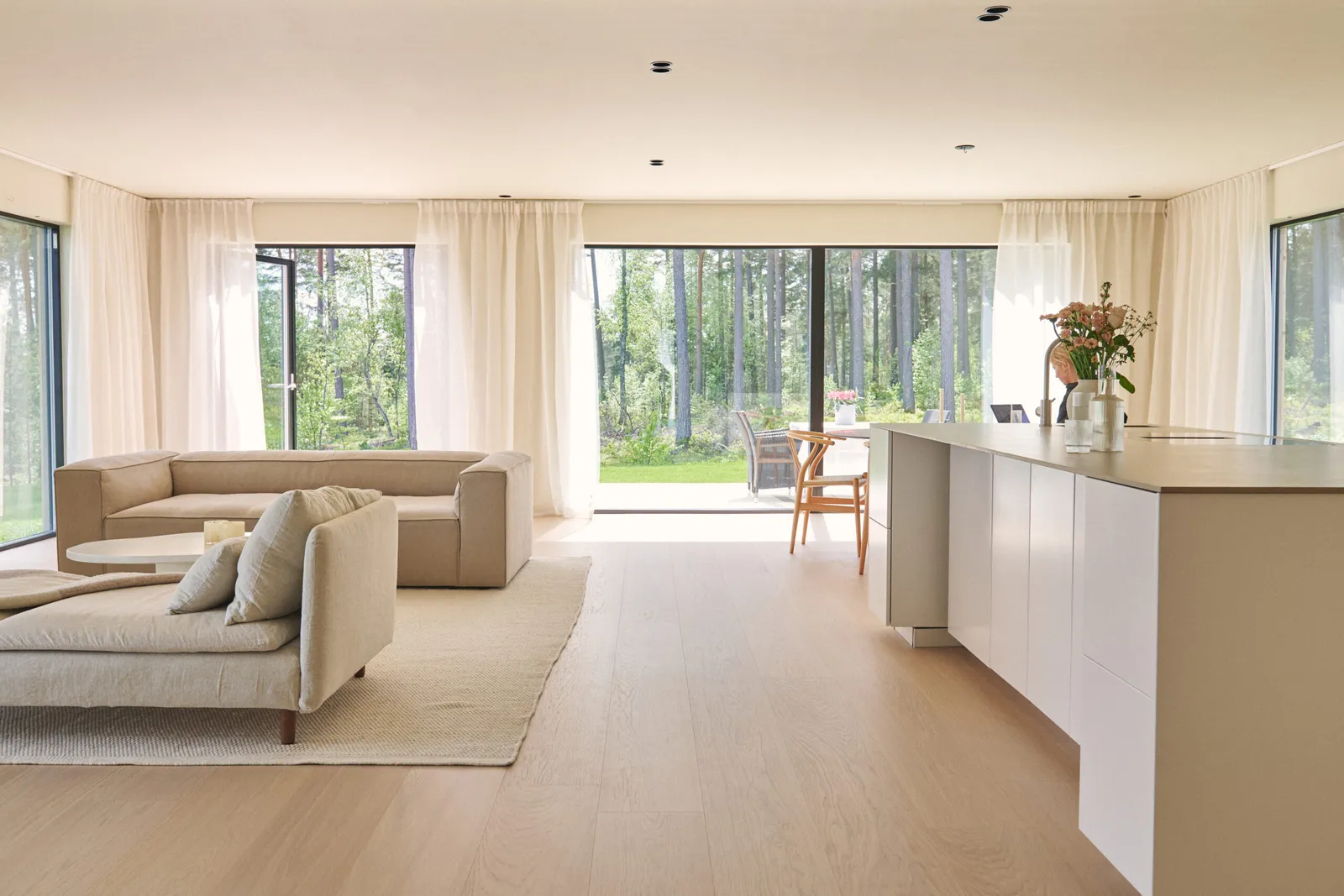
Choosing a material that reflects natural variation helps create an authentic foundation. “Wood floors, in particular, fit perfectly with the principles of biophilic design,” continues Hannes Boman. “Natural grain patterns introduce subtle irregularities that our brains instinctively recognise as natural.” Unlike uniform surfaces, wood changes with the light and through use, gaining depth over time.
Moving from perfection to authenticity
One of the key features of biophilic design is the gradual move away from overly processed, uniform materials. In their place, surfaces that reflect the natural appearance of materials are increasingly sought after.
“By its very nature, biophilic design takes an approach that considers the entire life cycle of a product or space,” explains Hannes Boman. “This covers everything from responsible sourcing and the choice of natural materials to their use, the wellbeing of occupants, durability, reuse and end-of-life impact.”
In the past, the trend was for perfection, with no knots or variation and a perfectly even colour. “Today, we are seeing exactly the opposite,” explains Hannes Boman. “People are looking for authentic materials. Subtle variations in colour or texture make an interior feel much more alive.”
This shift has a direct impact on flooring choices. Natural tones and more varied shades are gaining ground. Light tones with a freshly sawn look create a fresh, calming foundation, while warmer shades add depth and a sense of refuge.

Light and perception
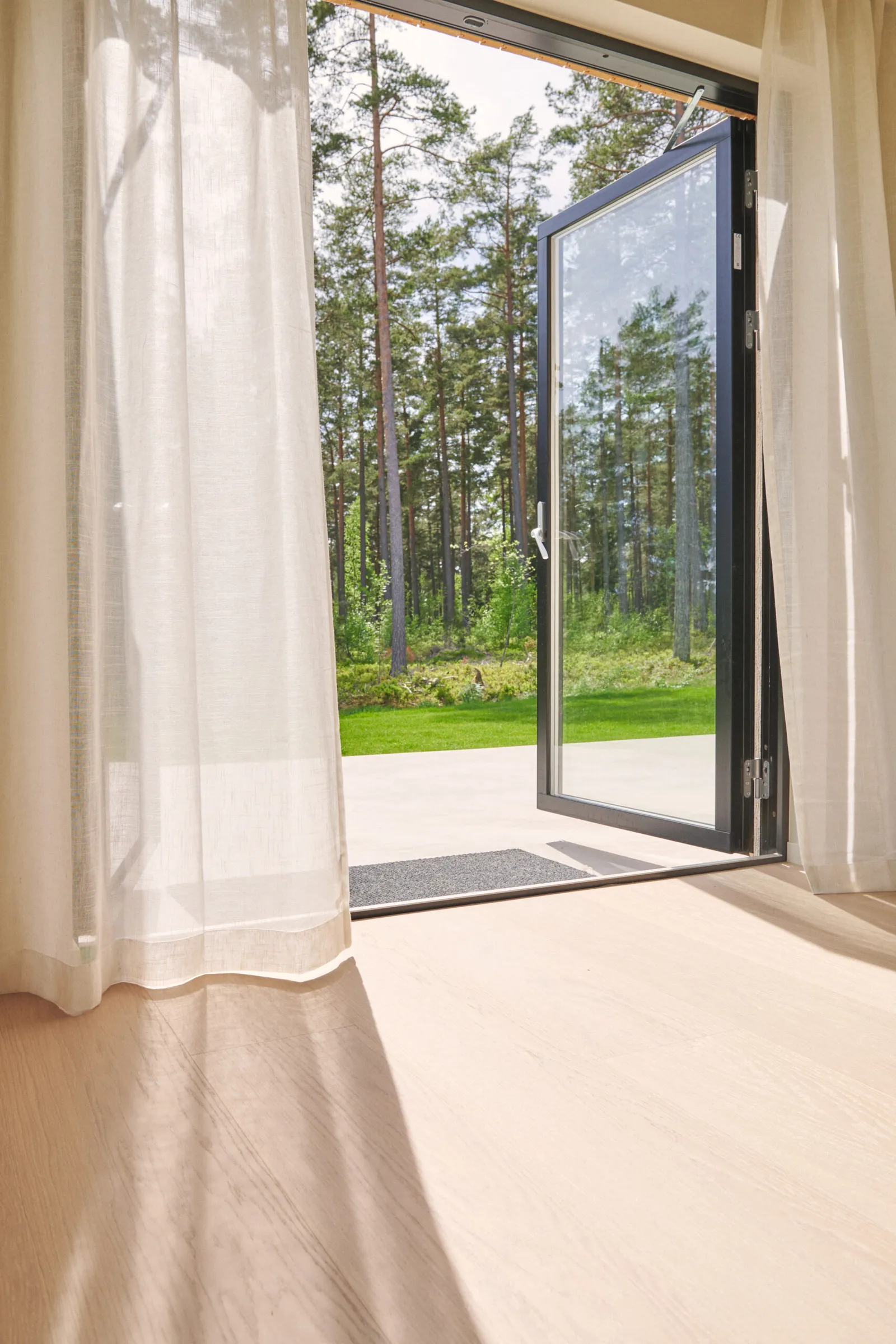
Biophilic design also considers how spaces interact with light, an area in which flooring plays a major role. Light-coloured surfaces reflect more natural light, creating a sense of space and airiness. At the same time, the subtle variations in wood prevent the floor from looking uniform or impersonal.
“Good flooring should work in harmony with the space around it,” says Hannes Boman. “As the light changes throughout the day, its surface should reveal subtle nuances too. This is what brings rhythm to an interior.” This quality is particularly important in Scandinavian interiors, where natural light varies considerably with the seasons.
Flooring designed for everyday life
The way spaces are used must also be taken into account. Demand is steadily growing for flooring that combines durability with a natural aesthetic. “Biophilic design is not fragile,” says Hannes Boman. “It must adapt to real living spaces, inhabited by real people. Materials need to be both hard-wearing and authentic in their expression.”
A foundation that shapes everything else
As one of the largest surfaces in an interior, flooring plays an essential role in this equation.
“When the floor is chosen well, everything else naturally falls into place,” concludes Hannes Boman. “It creates a calming, stable foundation that is deeply connected to its surroundings. This is what people instinctively respond to, even if they cannot always explain it.”
In short, natural materials, a variety of textures and the way light interacts with surfaces create a sense of calm and belonging.
Question about this story? Ask your question
Keep following this
Get an email when a new story is published. No account needed.
- ThemeFloors and walls in renovation
- SubjectNews