










Oak: a reliable choice for joinery and interior fit-outs
Texte Wendy Thijs | Photos Hout Info Bois/Treeline/De Bosbeke
Oak is a timber used by professionals across the industry. A reliable choice for interior fit-outs and joinery in Belgium, it is also highly regarded by architects and end clients. That is hardly surprising: oak is widely available, timeless and pleasant to work with. But just because it is commonly used does not necessarily mean it is well understood. So let’s take a closer look.
The oak used in Belgium comes mainly from Europe and North America, although the species is found worldwide. Varieties also grow in South-East Asia, notably in Java and Indochina, as well as in Central and South America. There are several hundred oak species in total.
A widely available timber
A word of caution: some species sold as “chêne” or “oak” are not botanically true oaks. Only timber from the genus Quercus can be called oak. When the term “oak” is used without further qualification, it generally refers to European oak. The most common species are pedunculate oak (Quercus robur) and sessile oak (Quercus petraea). North American oak is identified as such.
Although wood is naturally an environmentally friendly building material, its impact can be reduced further by favouring local supply chains. Oak grows well in Belgium, making it entirely possible to develop a local supply chain that reduces transport and environmental impact.
A timber with many faces
In North America, two main groups are distinguished: white oak and red oak. European oak is closer to white oak, with heartwood ranging from light brown to golden brown. Red oak has pinker tones.
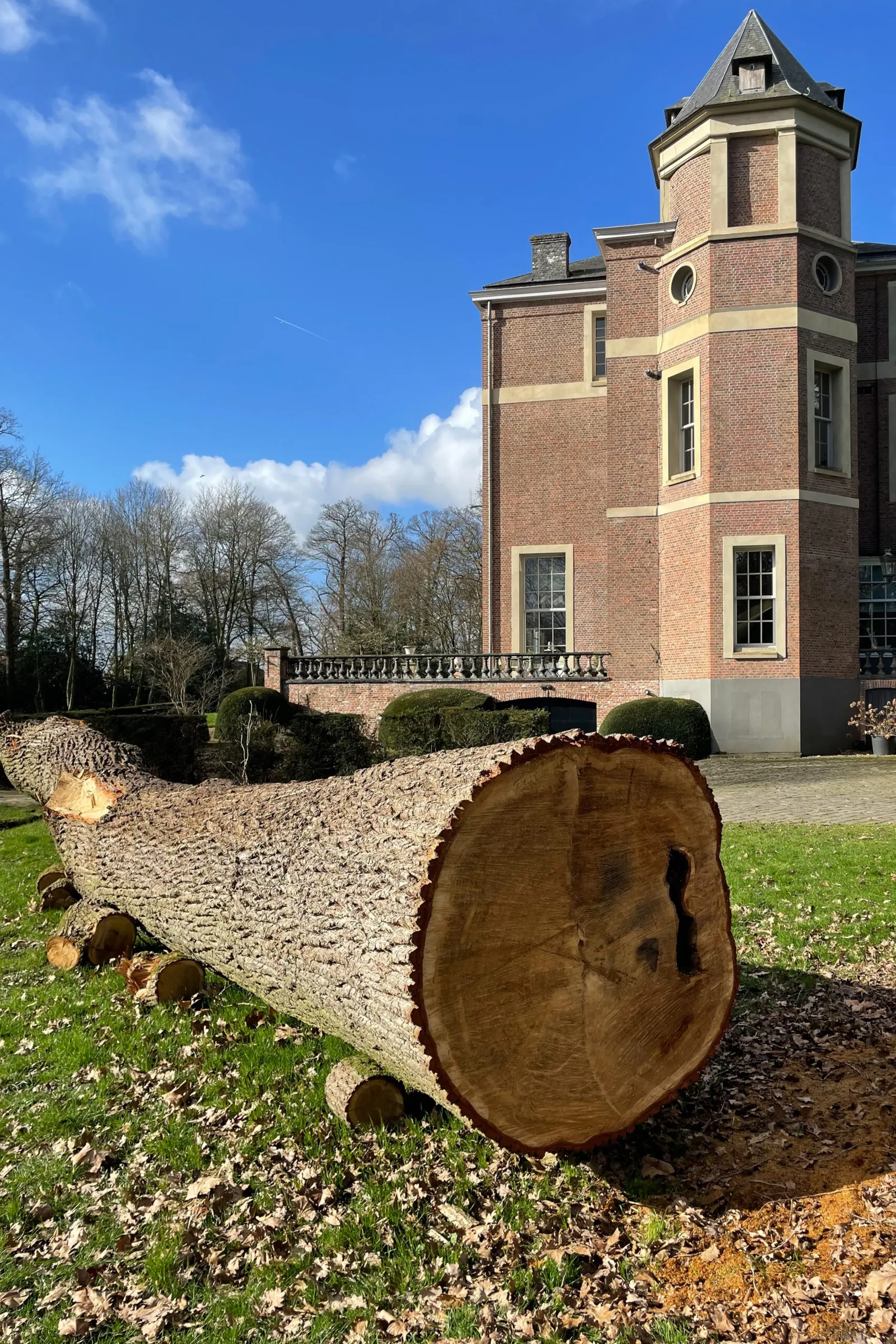
The growth rings are clearly visible on the end grain. Flat-sawn oak displays a pronounced cathedral grain pattern, giving it a lively appearance. Quarter-sawn oak shows the medullary rays as flecks, creating a medullary-ray figure. This look is highly sought after, but also more expensive, as quarter sawing produces a lower yield.
A timber covered by quality standards
Given its widespread use, oak is subject to precise grading standards. For European oak, Belgian standard NBN EN 975-1:2009 defines visual quality criteria, including the frequency and extent of visible defects such as knots, splits and the presence of sapwood.
American oak is graded according to a specific system based on the cutting system, in which a board’s grade is determined by the percentage of clear surface, rather than by assessing each defect individually.
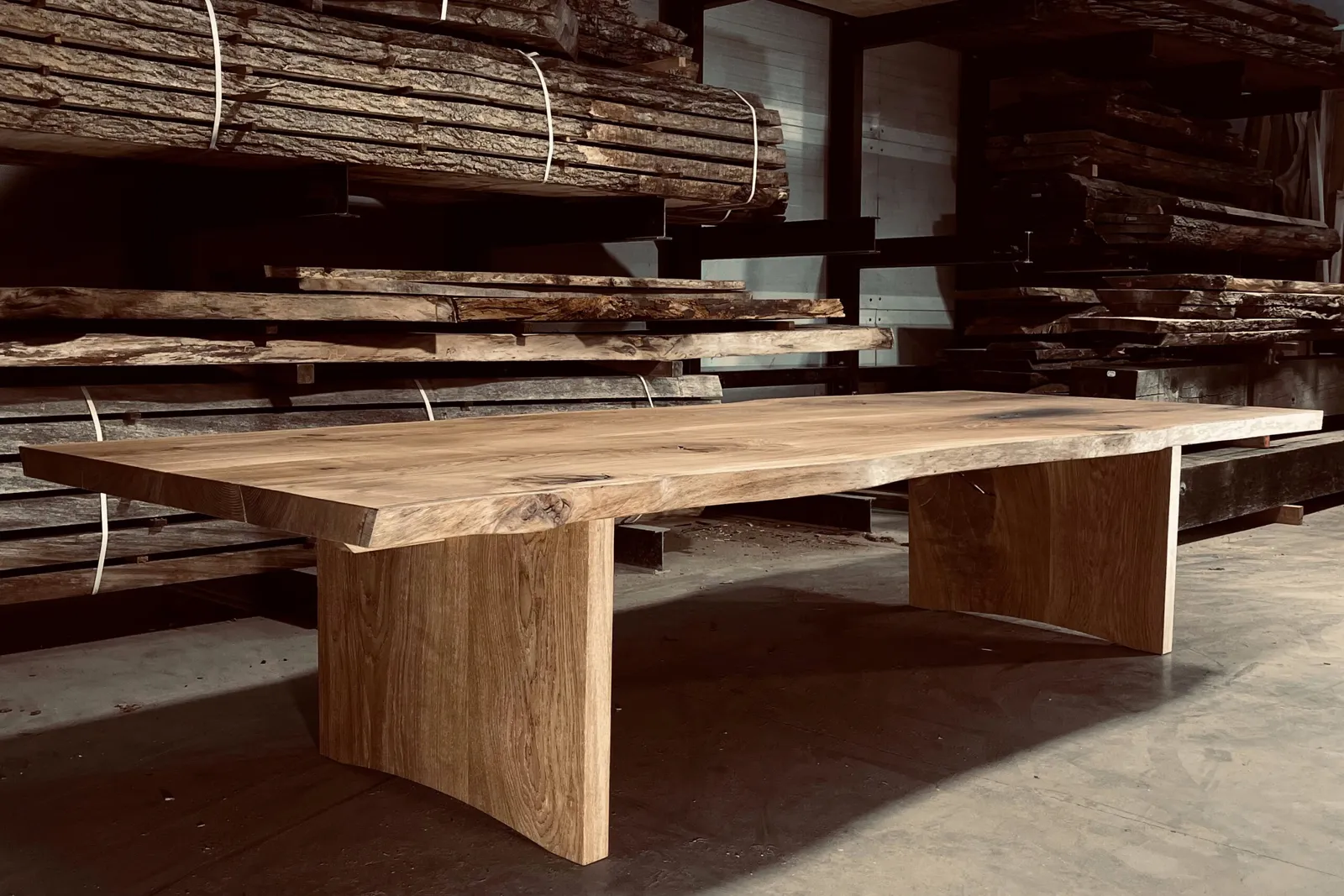

From flooring to bespoke work
Oak is widely used in interior fit-outs, mainly thanks to its heartwood, which has moderate to high durability (class II-III). Sapwood, on the other hand, is not very durable and is therefore used less.
The better grades are often used for flooring and veneer, and sometimes made into panels. Oak is also widely used for interior doors, furniture and staircases, as well as for structural timber.
Points to consider during installation
When properly dried, oak is stable, but requires some precautions. It is prone to splitting, so pre-drilling is recommended when screwing or nailing. Stainless steel fixings are also advisable, as the tannins in oak react with metals and can cause staining.
Oak can be worked equally well by machine or by hand. For a fine finish, a cutting angle of around 20° is recommended. For curved shapes, steam and a former can produce good results, particularly with European oak.
For technical questions about oak, Hout Info Bois remains a useful resource.
Question about this story? Ask your question
Keep following this
Get an email when a new story is published. No account needed.
- ThemeTimber and panels under pressure
- SubjectNews