










WOOD.BE informs manufacturers about reaction to fire in interior applications
Texte : Marlies Decavel Illustrations : WOOD.BE

In this era of innovation, manufacturers must comply with the legislation in force. Whether it concerns safety, sustainability or traceability, the right markings and certificates are essential, particularly when it comes to fire safety. What are the requirements? And what should manufacturers like you take into account? WOOD.BE, the knowledge centre for the wood and furniture industry, summarises the key requirements for you

Reaction to fire versus fire resistance
One important distinction in the field of fire safety is between the reaction to fire of wood products and their fire resistance. The latter measures a material’s ability to limit the development of a fire and maintain the stability of a construction, among other things. It is expressed in minutes and relates mainly to building structures and compartmentation.
Reaction to fire refers to how a material behaves in a fire: how does the product perform when a fire breaks out? Lieven De Boever, Business Development Manager at WOOD.BE, explains: « When determining a product’s reaction-to-fire class, we assess the risks in the event of a fire. Is it easily ignited? Does it produce a lot of smoke? How much burning material will fall? The results of this analysis are used to assign the product a reaction-to-fire class in accordance with European standard EN 13501-1 ». Legislation sets out reaction-to-fire classes for different types of room and applications (for example, floors, vertical walls and ceilings), taking into account the risks associated with occupancy.
How do you read a reaction-to-fire class?
The reaction-to-fire class is shown as a three-part code, for example B-s2,d0. First, there are seven classes, from A1 and A2 to F. Materials rated A are non-combustible, while F-rated products can contribute to the acceleration and spread of a fire.
Each product is also rated for smoke production, indicated by an « s » (for smoke) followed by a number (1, 2 or 3). An s1 rating indicates low smoke production, while s3 indicates high smoke production. As Lieven De Boever explains: « Toxic smoke and reduced visibility during evacuation often cause more casualties than the fire itself. As a result, products with the lowest possible s rating are best suited to interior applications ». The reaction-to-fire class ends with a d rating, which assesses the formation of droplets. Will burning particles fall? How quickly will they go out? A rating of 0 means that no debris will form, while a rating of 2 indicates the formation of large quantities of burning droplets and particles. For interior applications, the lowest possible rating is once again preferable.
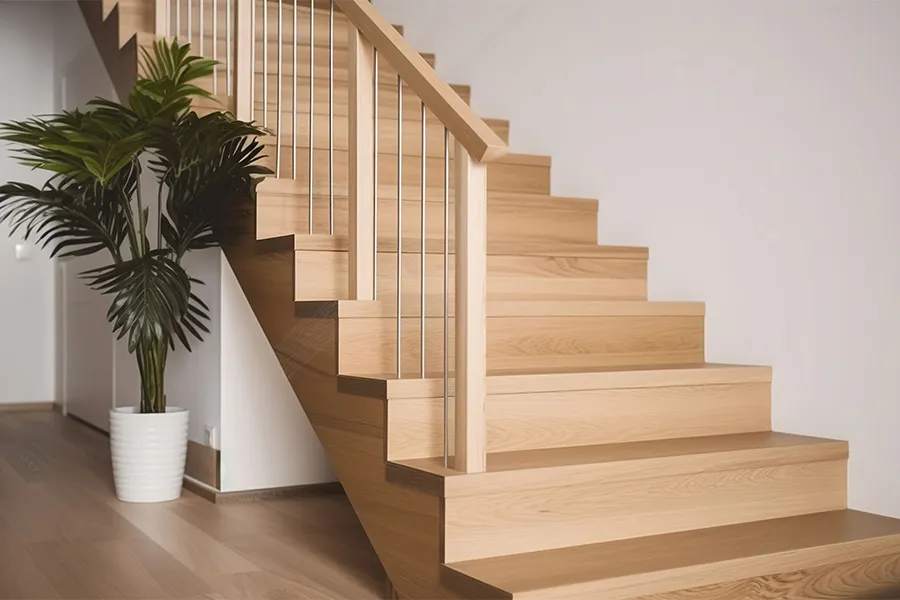
Legal requirements
Whether it is furniture, flooring or doors, every application must meet the applicable reaction-to-fire standards. For some products, a test report or CE marking is sufficient. « CE marking provides for 4 attestation systems (1, 2+, 3 and 4), under which different tasks are assigned to manufacturers and notified bodies, depending on the product », explains Lieven De Boever. « For products that have not been treated with a fire retardant, the reaction-to-fire classification may, under certain specific conditions, be included in the CWFT (Classification Without Further Testings) table without testing (level 4). At level 3, tests must be carried out in a notified laboratory. As soon as you work with fire-retardant-treated products, you must work with a notified body such as WOOD.BE (levels 2+ and 1) for sampling before testing and for annual audits as part of CE certification. » Regardless of the AVCP system that applies, responsibility for CE marking always lies with the person placing the product on the market.
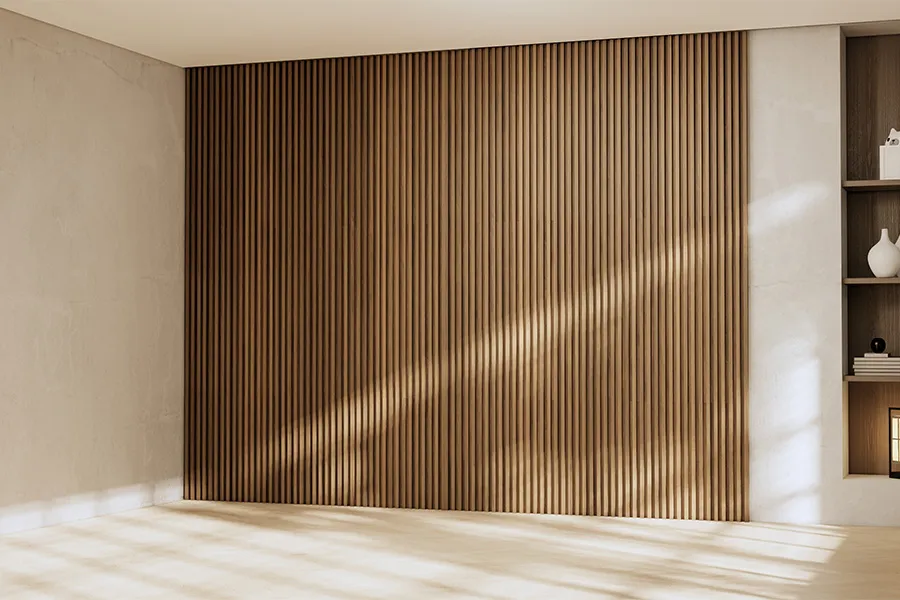
End-use conditions
CE marking is accompanied by a declaration of performance, which describes in detail the tests to which the product has been subjected, how it must be used in practice and any limitations that may apply. The declaration of performance is drawn up by the manufacturer and bears an identification number that refers to the CE marking. The latter can be provided to the end customer with the invoice, giving them all the essential information about the possible applications. « The installation method must always match the description in the declaration of performance. So never proceed if you have any doubts. WOOD.BE can point you towards the appropriate certificates and procedures by providing information on standards and test configurations », concludes Lieven De Boever. « For the sake of safety and your wallet, don’t wait until it’s too late! If in doubt, WOOD.BE is here to help. »
Question about this story? Ask your question
Keep following this
Get an email when a new story is published. No account needed.
- SubjectProducts