









Timber, the key to affordable housing
Texte Lieke Bousema | Photos Bostoen
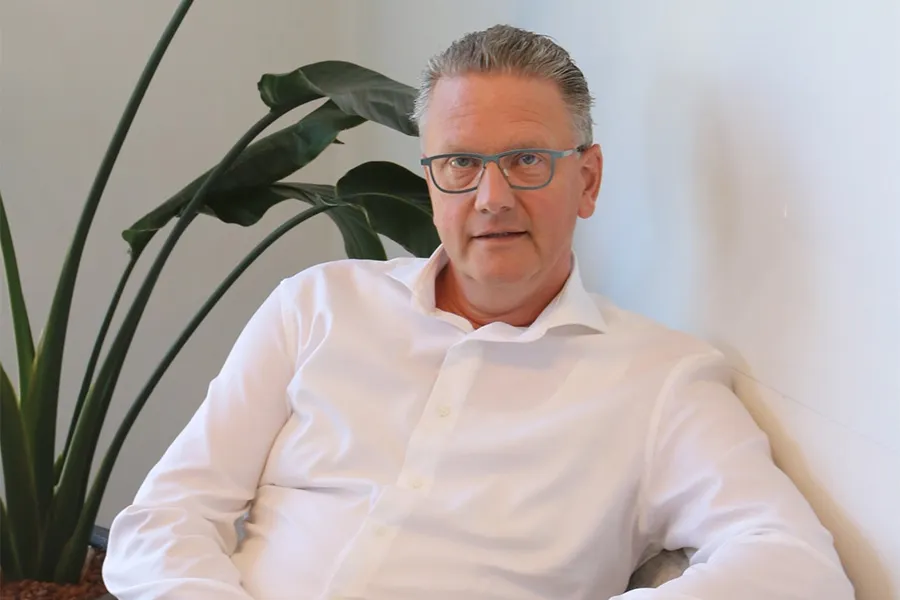
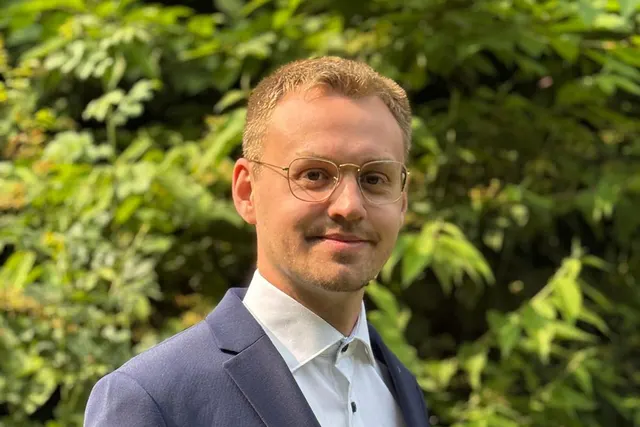
Johan De Vlieger is convinced: timber is the future of residential construction. In his view, within a generation or two, traditional houses will disappear completely, making way for a new reality: modular timber-frame construction. Johan De Vlieger is CEO of Groupe Bostoen, which comprises Bostoen, Jumatt, BFB Construct and BFB Wood. With the latter company, he is already preparing for future developments.
With 50 years’ experience in turnkey solutions, property developer and contractor Bostoen delivers high-quality, sustainable new-build projects. The company is committed to people and the environment at every stage, from start to finish. It was founded in 1973 in Flanders by Francis Bostoen, who set out to create high-quality, affordable homes for everyone. “That approach has never changed,” says Johan De Vlieger. “Housing remains a basic need, although the definition of what is affordable has changed considerably. As an organisation, we have moved with the times. Around 2000, for example, we realised that the housing of the future would require a different approach from that used today. New perspectives on environmental sustainability and worrying trends such as labour shortages mean that traditional masonry construction of houses and apartment buildings is no longer viable. The bricklayer of old has all but disappeared. That is why, around 2000, we acquired an established company with 60 years’ experience in modular timber homes: Jumatt, which continued to grow in the years that followed. This marked our move from the business-to-consumer (B2C) market to the business-to-business (B2B) market, where we build standardised elements under the BFB Wood name. Entirely in timber and preferably on a modular basis.”
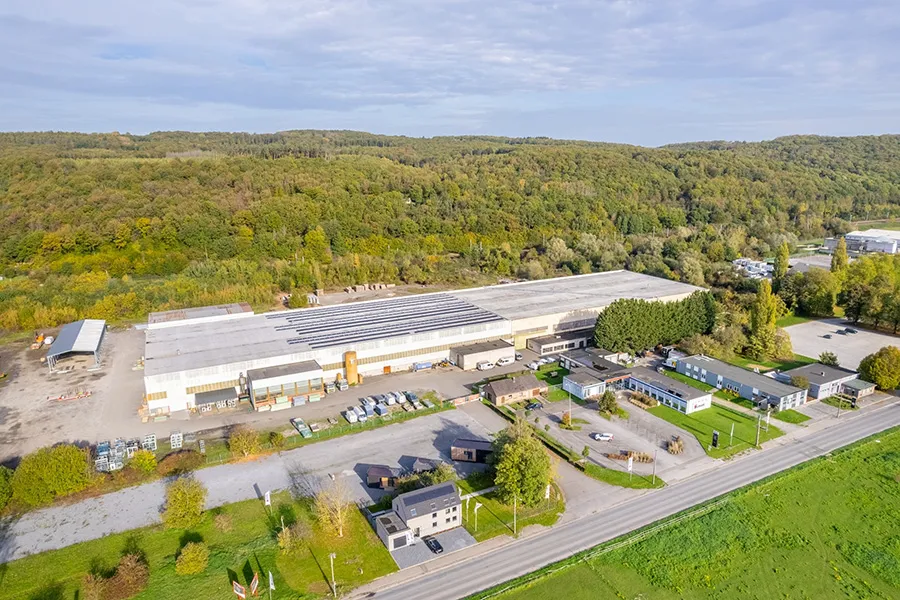
Shifting from B2C to B2B
“Modular timber construction is the future of residential construction in Western Europe,” says Johan De Vlieger. “We have been following this market for more than 50 years, including the labour market, environmental concerns and the issue of affordability. Whichever way you look at it, more and more people want to settle in our countries. As a result, the housing shortage will continue to worsen. This trend is compounded by the number of permits required to make the housing of the future possible. These come not only from the authorities, but also from citizens, who increasingly feel empowered to take action and oppose any construction in their neighbourhood. As a result, housing is becoming less affordable, and the target group will also change. We therefore expect to build increasingly for investors, who will then offer the homes on the rental market.”
The advantages of timber
According to Johan De Vlieger, affordability is also central to this new reality. The lower the cost price and sale price of a rental property, the higher the financial return for the investor. “We can address this by building modularly, and timber offers many advantages. For example, timber construction is considerably faster than traditional construction, and its thermal and acoustic insulation values are also better. The same applies to quality, because construction can take place in better climatic and working conditions. In terms of price, timber construction costs the same as, or even less than, traditional construction. What’s more, it is much better for the environment. The tree we fell today for our modular homes will be replanted tomorrow. That is how we close the loop.”
A brick in the belly
Looking at the world as a whole, more than 80% of residential construction is in timber, says Johan De Vlieger. “From Scandinavia to Canada, and across the United States, Austria and Switzerland, everyone builds in timber. Only in Belgium, the Netherlands and some neighbouring countries do we have the proverbial brick in our belly. We may think our way of building is perfectly normal, but that is far from the case. And we expect this method of construction to gradually disappear. In a generation or two at the most, nobody will build traditionally any more, and construction will be entirely in timber. With BFB Wood, we are already preparing for that.”
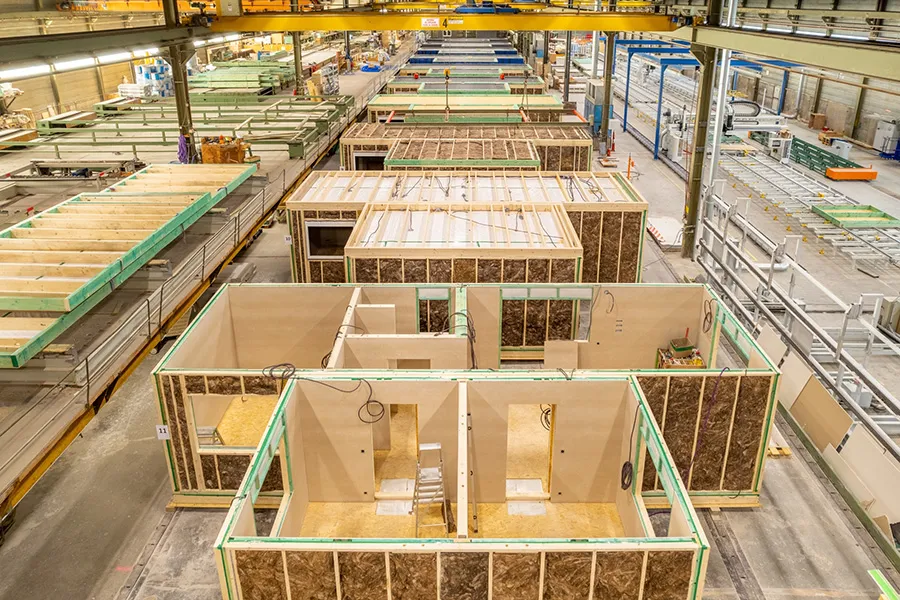
Standardisation as the basis for affordable housing
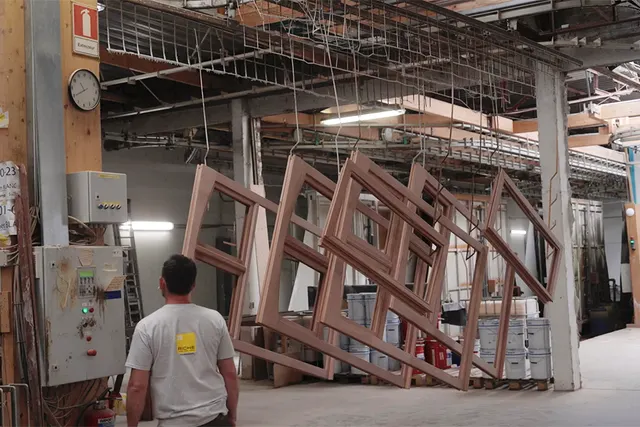
“To keep our homes affordable in the future, we have moved away from the idea of ‘bespoke’,” explains Johan De Vlieger. “Instead, we have deliberately opted for standardisation.” He compares this approach to a game of Lego, where everyone gets the same type and number of bricks, but builds completely different structures. “The modular building blocks that come out of our factory are external walls, internal walls, ceilings and roofs (2D). But also complete modules (3D), which property developers, architects and contractors can use to build entire buildings. From tiny houses to detached homes and apartment buildings, which can then be rented or sold to consumers. With this approach, we are not reinventing the wheel, but embracing the inevitable transition to timber. The younger generations are probably ready for it, but older generations need to get on board too. Timber homes for older people must become an option for them as well. A traditional house is not a bad thing, but it is different. And above all, it is not our future.” An extraordinary claim from someone who has built brick houses for 50 years. But, as he says himself: “Only fools never change their minds”. ■
Question about this story? Ask your question
Keep following this
Get an email when a new story is published. No account needed.
- SubjectNews